
It’s Friday afternoon. You’ve hooked the caravan up, the ute’s loaded, and you’re heading up the Hume toward Mansfield, the Murray, or the High Country. Then you hit a long climb past Wallan and the rear of the car squats hard, the steering feels light, and you start questioning whether you checked anything before you left.
Towing readiness isn’t about your vehicle’s advertised tow rating. It’s about whether the tyres, suspension, brakes, steering, cooling and alignment can handle the real load you’re putting on the car. A 4WD that’s fine for daily commuting can still struggle once you add a trailer, a caravan, a rooftop tent, or a full tray.
At Service Plus Tyre & Auto in Wallan, we see the same towing problems every spring and summer. Most of them are picked up before the trip in a 30-minute inspection.
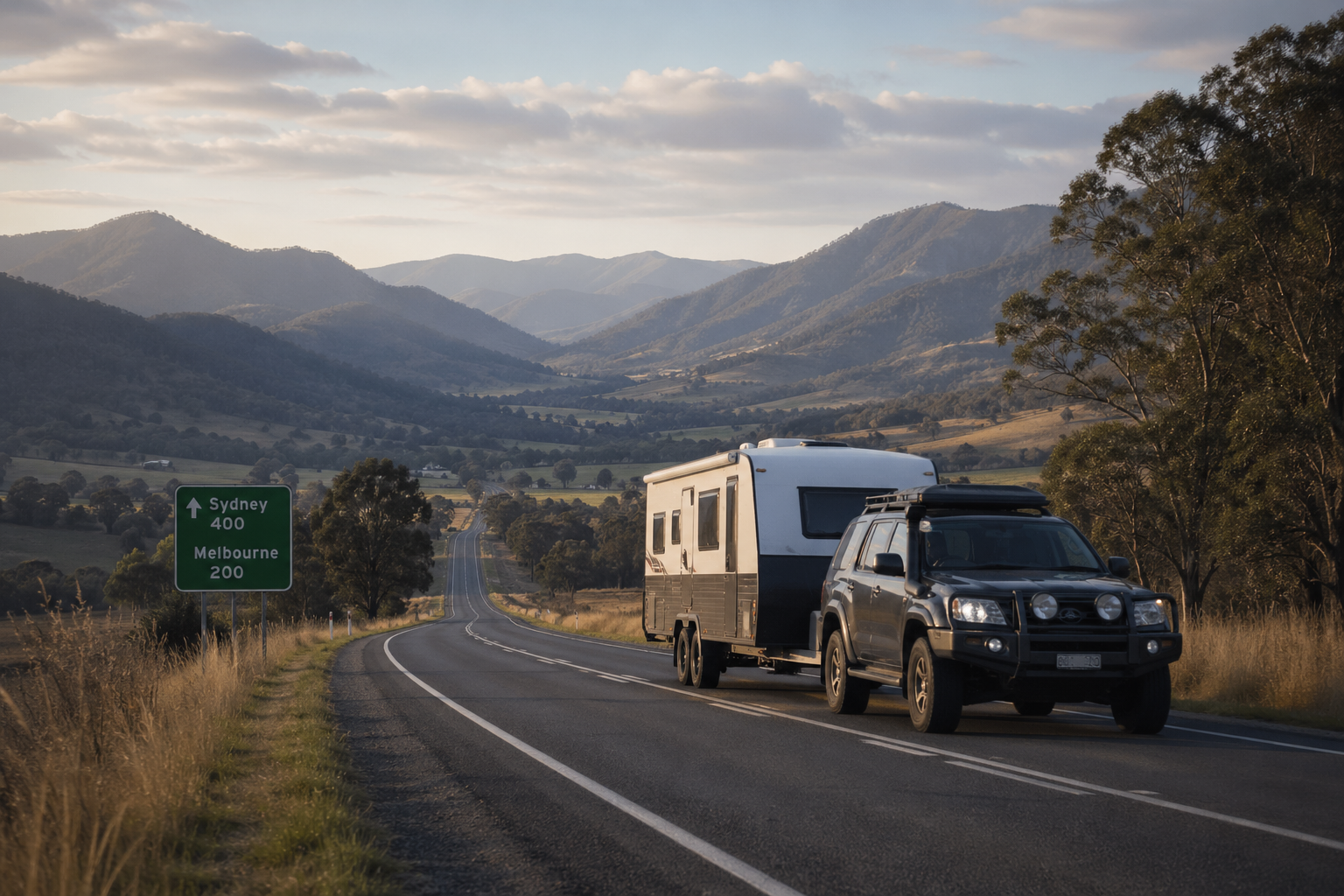
What makes a 4WD ready to tow?
A 4WD is ready to tow when every system that takes the extra load has been checked. The tow rating in your owner’s manual is a maximum under ideal conditions. It is not a guarantee that your vehicle, with its current tyres, suspension and brakes, can safely handle that weight today.
The systems that matter most for towing readiness are:
- Tyres: age, load rating, pressure and tread
- Suspension: springs, shocks and how much the rear sags under load
- Brakes: pads, rotors, fluid and the trailer brake controller if you have one
- Steering and wheel alignment
- Cooling system and transmission fluid
- Battery and electrical, especially with a fridge or dual battery setup
- Towbar, tongue, ball, safety chains and the trailer plug
If any of these are tired, you will feel it under load, even if the car feels fine on a Monday morning commute.
Are your 4WD tyres rated for the load?
Tyre load rating is the maximum weight one tyre can safely carry at a given pressure. Most 4WDs leave the factory with tyres that handle the empty vehicle plus a normal load. They are not always set up for a fully loaded ute with a 250 kg towball weight on the back.
When you switch to an all-terrain or larger off-road tyre, the load rating can drop if you do not check the specification. A tyre rated for off-road use is not automatically rated for the same load as a stock highway tyre. Service Plus checks load index, age and pressure for the real towed weight, not the placard pressure for an empty vehicle.
Victorian law sets a minimum tread depth of 1.5mm in the principal grooves. RACV and most tyre manufacturers recommend replacing tyres at 3mm for safer wet braking before towing.
Does your suspension handle the towed weight?
Suspension is the first system to show problems when you load a 4WD. Tired springs sag under the towball weight. Worn shocks let the rear bounce, which makes the trailer or caravan push the car around at speed.
This is where the difference between an upgrade, a lift kit and a service starts to matter.
x
| Type of work | What it is | When you need it |
|---|---|---|
| 4x4 servicing | Inspection and adjustment of existing suspension, steering and driveline | Before a long trip, after a heavy season, or at logbook intervals |
| Suspension upgrade | Heavier-duty springs and shocks designed for load, towing or touring | The vehicle sags under load, rides poorly when loaded, or you tow often |
| Lift kit | Raised suspension to fit larger tyres or improve off-road clearance | Off-road touring, larger wheel and tyre packages, accessory clearance |
Two things worth being clear about. A lift kit does not raise your vehicle’s legal tow rating. Tow rating is set by the manufacturer and only changes through a certified GVM upgrade. A suspension upgrade can make the vehicle handle a load better, but it does not change the legal numbers on the compliance plate. If you are loading near or above your rated capacity, weigh the real setup at a public weighbridge. Better suspension is not the same as more legal capacity.
Will your brakes and steering cope under load?
Brakes do more work towing than they do unloaded and they heat up faster on a long descent. Worn pads, glazed rotors or old brake fluid all show up sooner under tow. If you have an electric trailer brake controller, the trailer brakes need to be balanced with the vehicle brakes so they share the work.
Steering play feels bigger when you add weight behind the rear axle. Small movements at the steering wheel become bigger movements at the towball. Wheel alignment matters for the same reason. A car that drifts slightly on a normal commute will drift more once you add a caravan, and you will feel it as fatigue in your hands and shoulders after an hour up the Hume.
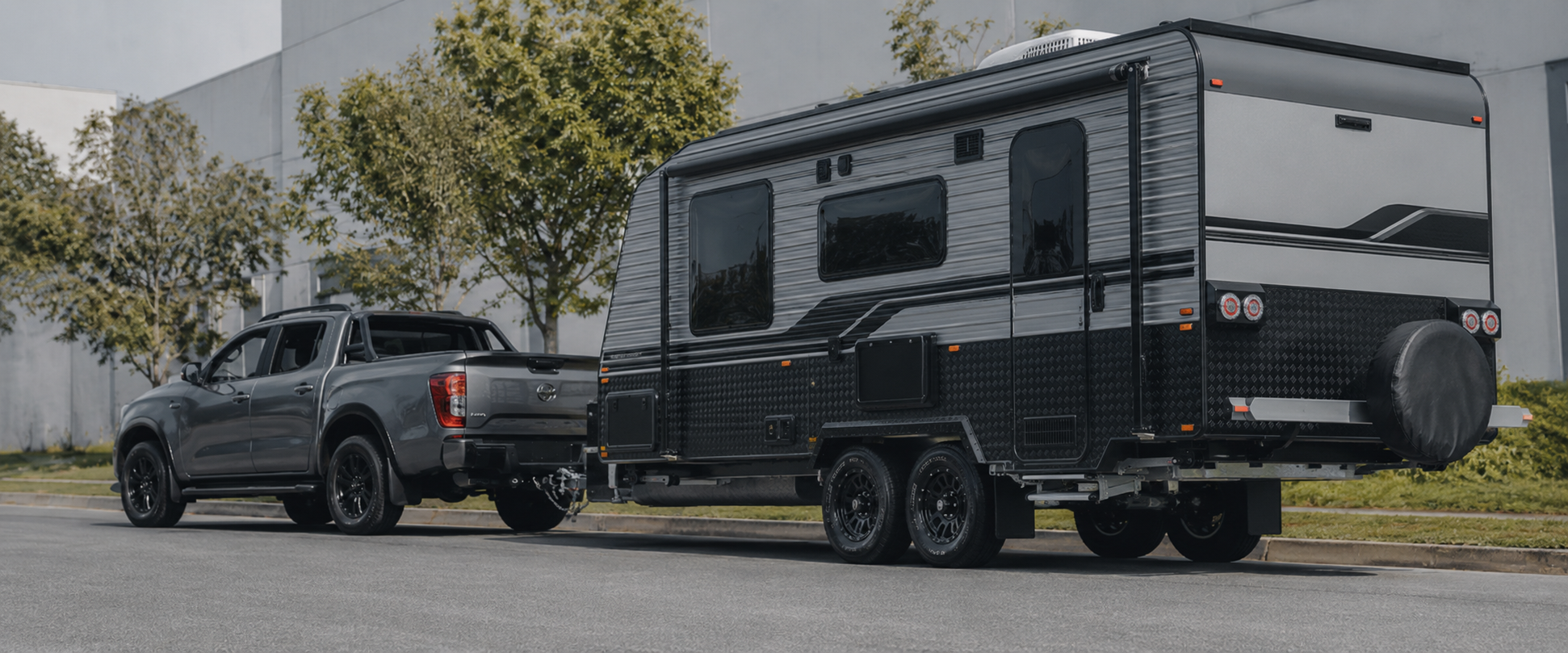
What a Service Plus towing readiness check covers
A towing readiness inspection at Service Plus targets the systems that fail first under load. The aim is to find tired components before they fail on a trip, not to sell you parts you do not need. It sits alongside our regular 4x4 servicing and can be booked as a standalone check before a long tow.
| Symptom you have noticed | Likely area | What we check |
|---|---|---|
| Rear sits low when loaded | Suspension sag, towball weight | Spring height, shock condition, towball weight at the real load |
| Steering feels light or vague | Steering, alignment | Steering play, ball joints, tie rods, alignment under load |
| Car pulls left or right on the Hume | Alignment, tyres, brakes | Alignment, tyre wear pattern, brake drag |
| Bouncy ride at highway speed | Shocks, tyre pressure | Shock damping, pressure set for real towed weight |
| Squeal or long pedal under braking | Brakes | Pad thickness, rotor surface, fluid condition |
| Trailer pushes the car around | Suspension, towbar, weight distribution | Towball weight, suspension condition, distribution hitch if fitted |
| Headlights aim too high at night | Rear sag under load | Suspension height under load |
Caravan vs trailer: does it change the checks?
A long caravan puts a steady load on the towball and rear suspension. A box trailer with a heavy load can shift weight around in corners and under braking. Both need the same basic checks before a trip.
Service Plus does not make legal calls on GVM or ATM, because those are compliance questions. What we do is check that the vehicle and trailer behave the way they should at the weight you are towing.
Frequently asked questions
No. A lift kit changes ride height and accessory clearance. It does not change the legal tow rating, GVM or GCM on your vehicle’s compliance plate. Those numbers are set by the manufacturer and only change through a certified GVM upgrade.
Not before every trip. A quick towing readiness check before a long tow or a heavy towing season is sensible. A full 4x4 service is more comprehensive and tends to fit at logbook intervals or after a hard off-road season.
Once a year, plus before any long trip with a heavier than usual load. Springs and shocks fade gradually, so the change is hard to feel until something else goes wrong.
Yes. Weigh the real, loaded combination, not the dry weight on the plate. Public weighbridges in regional Victoria are inexpensive and give you accurate towball weight, GVM and GCM under real conditions.
A tyre with legal tread can pass a roadworthy and still be a poor choice for towing. Rubber hardens with age, and older tyres lose wet grip and load capacity before they lose tread. Most major tyre makers recommend inspection from five years and replacement before ten.
Book a towing readiness check at Service Plus
If you are towing a caravan to the Murray, a tinnie to the lakes, or a work trailer up to Kilmore and Beveridge for a regional job, it is worth knowing the 4WD can handle the real load before you leave.
Service Plus Tyre & Auto in Wallan checks tyres, suspension, brakes, steering, alignment and towing setup in a single inspection. Book in a week or two before the trip so there is time to fix anything we find, not the morning of departure.

