
You picked the car up in March. The book said twelve months or 15,000 kilometres, whichever comes first. It is September, and the odometer got there first. Five days a week down the Hume adds up faster than the calendar does.
Log book servicing is due when either limit is reached, not when both are. For anyone covering real distance, that is nearly always the kilometres. It can fall months ahead of the date on the windscreen sticker. Going by the date is how a car ends up thousands of kilometres over its interval. Nobody decides to skip a service. They read the wrong number.
What ‘whichever comes first’ means when you drive a lot

Every service schedule carries two limits: a distance and a stretch of time. The service falls due the moment either one is reached. It is not a choice between them.
Drive to Melbourne and back each weekday and you will pass 15,000 kilometres well inside the year. Do all your driving around town and you may not reach it at all.
The rule reads the same way from both ends. A high kilometre car hits the distance first. It is due earlier than the calendar suggests. A car that mostly sits hits the twelve months first. It is due even though the odometer has barely moved. Neither owner is getting a worse deal. They are on one schedule, arriving at it from opposite directions.
Do highway kilometres wear a car out faster?
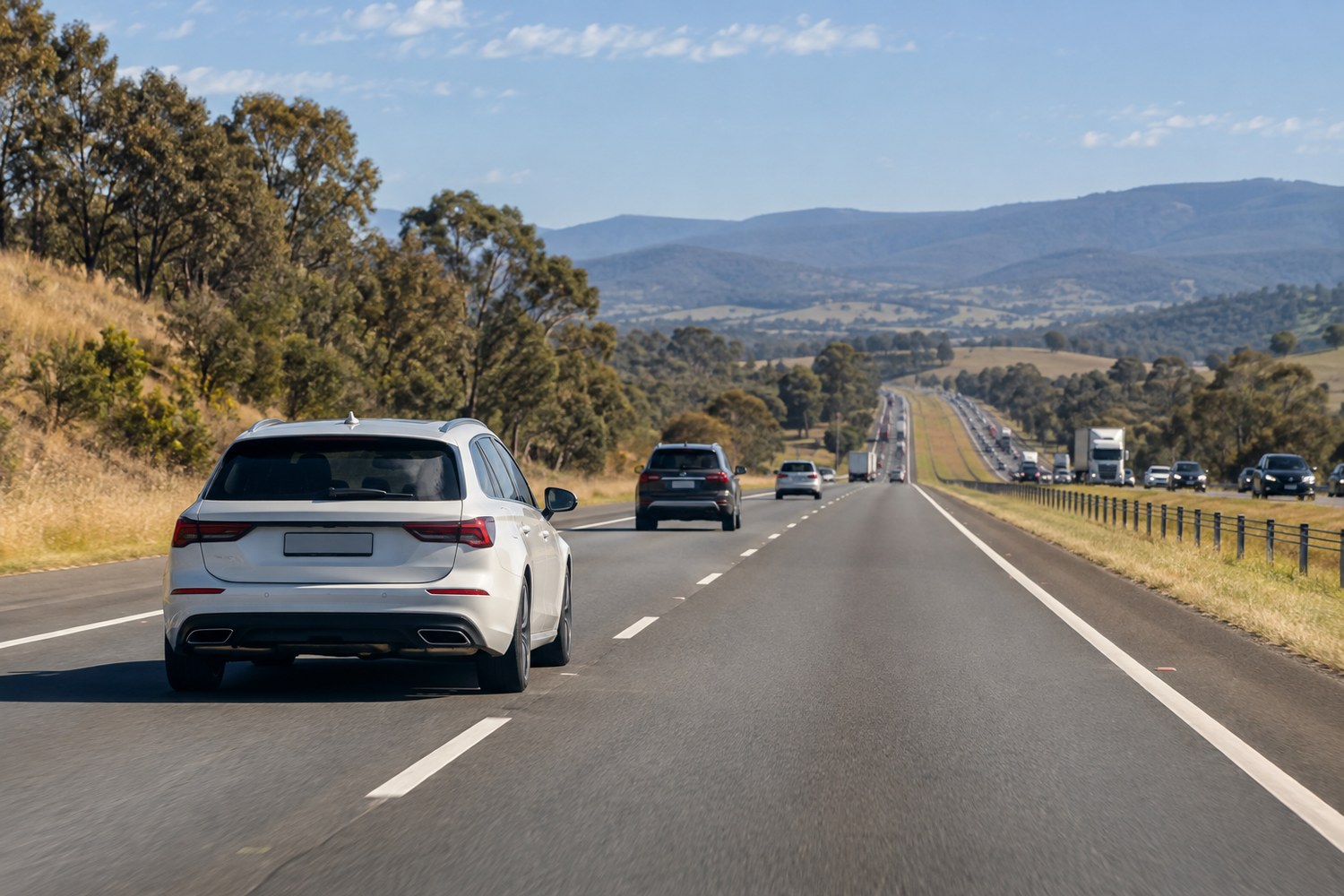
Not as much as the same distance covered in town. A long steady run is easier on a car than a short one.
An engine on a run like the Hume sits at full operating temperature the whole way. That matters more than it sounds. A little water and unburnt fuel get into the oil on every cold start. It takes a properly hot engine to drive them back out. Brakes get used far less at a steady 100 than in stop and start traffic. So do the gearbox and the clutch.
An easy run does not help with either of the two things a service schedule measures: distance covered, and time passed.
| Ages on the calendar | Wears on the odometer |
|---|---|
| Brake fluid, which draws moisture out of the air whether the car moves or not | Engine oil and the oil filter |
| Coolant and the other long life fluids sitting in the system | Brake pads and discs |
| Rubber hoses, belts and wiper blades, which harden and crack with age | Tyre tread |
| Tyres, which age past safe use even with tread left on them | Air and cabin filters |
A few items answer to both. A cambelt is the rubber belt that keeps the engine’s valves in time with its pistons. It is replaced on a distance figure, but it carries a year figure too. The rubber ages whether the car is driven or not.
An easy life for the engine and a short life for the service interval are not the same thing.
None of that makes big kilometres harmless. The wear is spread differently from how it looks. Freeway driving is gentle on brakes and hard on very little. The oil, the filters and the tyres still get to their number first.
Why log book servicing schedules are not the same for every car

There is no single national interval. Each manufacturer sets its own, and the spread is wider than it looks.
Twelve months or 15,000 kilometres is the common setting on a modern car. Plenty of makes run 10,000 kilometres instead. Some heavier utes and four wheel drives are shorter again, at six months or 10,000 kilometres. That reflects the work they are built to do here. Newer cars often drop the fixed number and work it out from sensors, then tell you on the dash. Many makes publish a capped price against each visit as well.
Most visits cover a similar core. Oil and filter, a look over the brakes and clutch, a check of the steering and suspension, then tyres, battery, lights, wipers and fluid levels. A scan of the car’s computer for stored faults usually finishes it. There is a full breakdown of what a log book servicing visit covers on the service page.
One thing worth clearing up while the book is open. A manufacturer warranty holds as long as the mechanic is qualified, the work follows the manufacturer’s specification and the parts and fluids are approved ones, so it does not have to be the dealer. An extended warranty sold separately can carry different terms, so read that one on its own.
Why does a major service cost more than a minor one?

The bigger visits are where the parts that come up once or twice in the whole book fall due together.
A routine visit is mostly oil, a filter, a set of checks and the labour to do them. Every so often the schedule stacks extra work onto the same appointment. Spark plugs, a fuel filter, a brake fluid change, a coolant change, a belt. Each is a part plus the time it takes to reach it, and some sit deep in the engine bay. So the jump is not the same job priced higher. It is a different job.
Your book marks which visits those are, and they are set by distance. A car covering big kilometres reaches them sooner in calendar terms. That is worth knowing before the quote arrives rather than after.
When to bring your service forward

Some driving is harder on a car than the schedule assumes. Where any of these describes a normal week, bring the service forward rather than running it to the number.
That last one catches people out, because on paper it looks like light use. The distance is low and the car looks barely touched. On wear it has had a harder year than a car that lives on the freeway.
- Towing. A caravan, a boat or a loaded work trailer puts the engine, gearbox and brakes under sustained load. The oil runs hotter for longer too. There is a separate checklist on what to look at before towing a trailer or caravan.
- Unsealed and dusty roads. Plenty of Mitchell Shire is gravel. Dust loads the air filter far faster than sealed roads do, and it gets onto everything underneath.
- Heavy loads. A ute carrying tools or stock every day works harder at the same kilometres than one carrying air.
- Long periods idling. The engine clocks up running hours without clocking up distance. The oil ages ahead of what the odometer shows.
- Lots of short stop and start trips. School run, shops, home again. The engine never gets properly hot, so the moisture and fuel in the oil stay there.
Two or three cars a week come through well past their interval. They had not decided to skip a service. They went by the date.
How to tell which service your car is due for

The book that came with the car is the authority. Find the service history pages and look at the last stamp. It records the date of the work and the odometer reading on the day. The row underneath is the one you are working towards.
If the book has gone missing, that is not the end of it. Any workshop can pull up the schedule for your car from the registration number or the VIN. That is the seventeen character vehicle identification number stamped on the body. Your current kilometres are read against it.
That is the useful next step. Bring the book in, or send your registration number and current odometer reading through. We will tell you which service the car is next due for. It takes a few minutes, and it beats working it out from the sticker on the windscreen.
Frequently asked questions
What happens if you go over your service interval?
Nothing gives way the moment you pass the number. The risk builds gradually instead. Oil past its useful life protects less than fresh oil, and anything scheduled for that visit stays undone. Book it in once you notice rather than waiting for the next round figure.
Does servicing early waste money?
Coming in a few hundred kilometres short of the number changes nothing about the work or the cost. Servicing at half the recommended interval on an easy life car mostly buys extra oil changes. The gains sit in the other direction, in bringing it forward when the driving is hard.
Does a car that barely gets driven still need a service every year?
Yes. The time limit is there for the parts that age whether the wheels turn or not. A car that sits will reach that limit long before it reaches the distance one. Low kilometres do not pause the calendar.
How do I find out which service my car is due for if the log book is lost?
A workshop can look up the schedule for your exact model from the registration number or the VIN. It is then matched against the odometer reading on the day. You do not need the physical book to work out where the car sits on its schedule.

