
You’ve loaded the van, the kids are arguing over who sits where, and you’re ten minutes from pulling out of the driveway. But when was the last time you checked whether your car is actually ready to tow?
Most towing breakdowns aren’t caused by the trailer. They’re caused by the tow vehicle – overheating, blown tyres, cooked brakes. The kind of problems a 20-minute check could have caught before you left home.
Here’s what to go over before you hitch up, whether you’re dragging a box trailer to the tip or pulling a caravan up the Hume to the Murray.
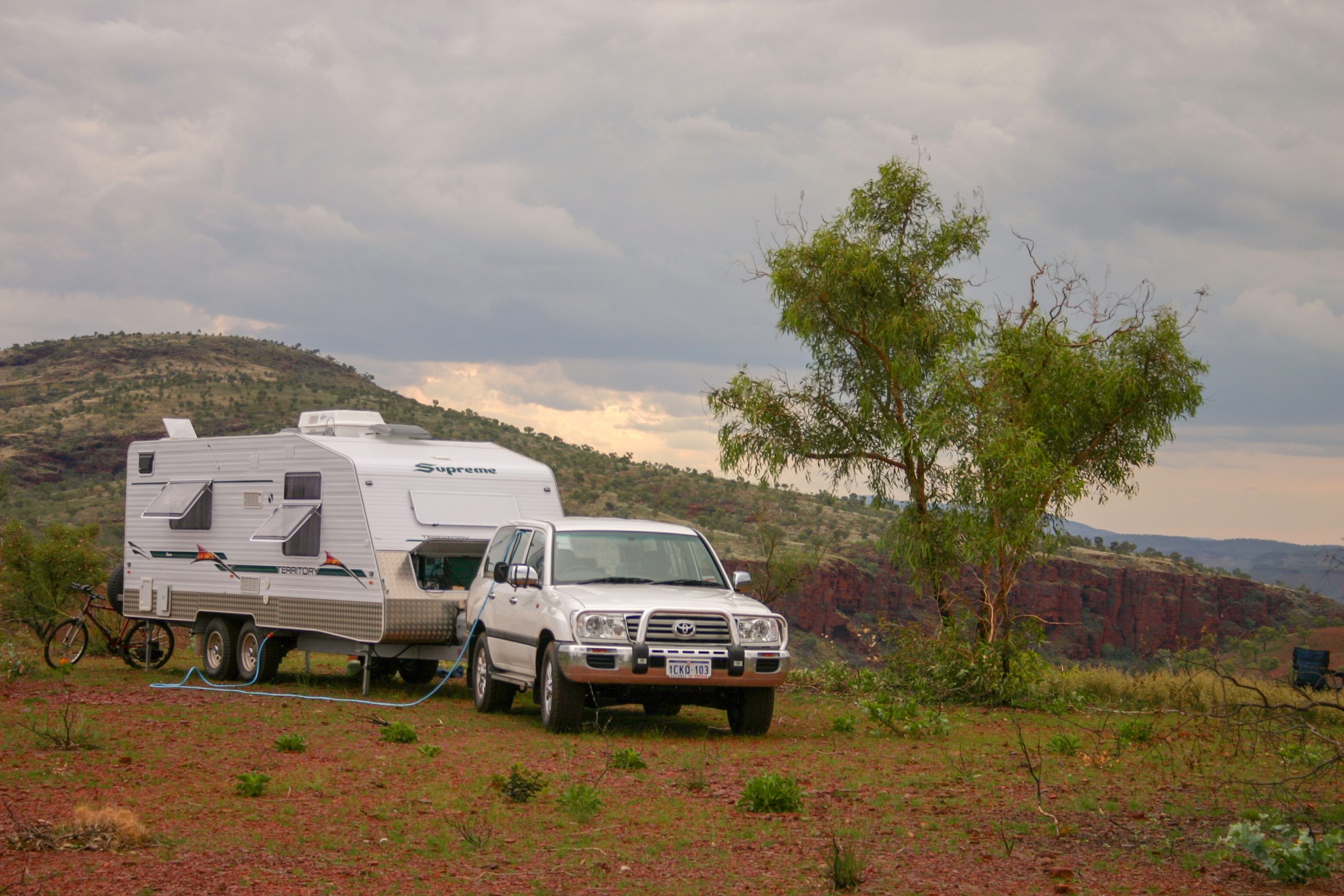
Do you know your vehicle’s towing limits?
Before anything else, you need to know four numbers. They’re on your vehicle’s compliance plate – usually on the driver’s door jamb or under the bonnet.
- Tow rating is the maximum weight your vehicle can pull. For most dual-cab utes, that’s 3,500 kg braked. But this number on its own doesn’t tell the full story.
- GVM (gross vehicle mass) is the maximum your vehicle can weigh when fully loaded – fuel, passengers, gear, accessories, and tow ball weight included. Think of it as the ceiling for everything sitting on your vehicle’s wheels.
- Tow ball weight is the downforce the trailer pushes onto the tow ball. As a rough guide, this is around 10% of the loaded trailer weight. A 2,000 kg caravan puts roughly 200 kg onto your tow ball – and that 200 kg counts against your GVM, not your tow rating.
GCM (gross combination mass) is the maximum total weight of your vehicle and trailer combined. This is the one that catches people out. Your GCM is often less than your GVM and tow rating added together.
Here’s how the calculation works in practice:
Payload remaining = GVM minus kerb weight minus passengers minus gear minus tow ball weight
If that number is zero or negative, you’re over your limit before the trailer is even connected. This is where a lot of people get caught – especially if they’ve added a bull bar, canopy, roof rack, and long-range fuel tank. Those accessories can easily chew through 200–400 kg of payload before you’ve packed a single bag.
If you’re consistently bumping up against your GVM when towing, a GVM upgrade kits may be worth looking into.
Are your tyres up to the job?
Tyres are the one thing connecting your vehicle to the road, and they work harder when you’re towing. Three things to check:
- Pressures. Your tyre pressures when towing should be higher than your normal unladen pressures – particularly the rears, which carry most of the tow ball load. Check the tyre placard on the door jamb or fuel filler flap for the manufacturer’s recommended towing pressures. If your placard only lists standard and full-load pressures, use the full-load figure for the rears.
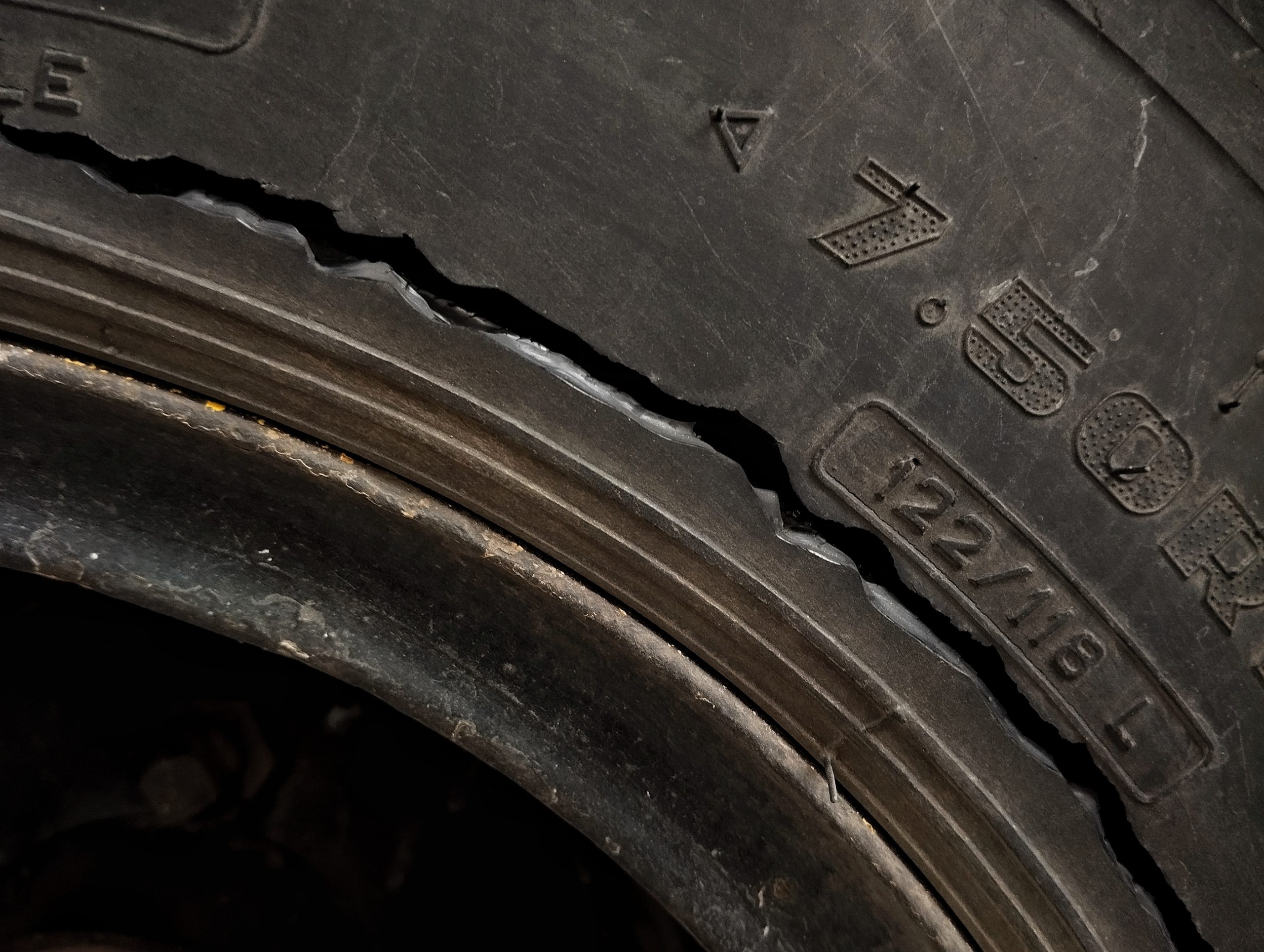
- Condition. Look for uneven wear, cracking in the sidewalls, bulges, or cuts. If you’re about to drive 500 km on a highway at 100 km/h with a loaded trailer behind you, a tyre that’s been marginal around town becomes a real risk.
- Load rating. Every tyre has a load rating stamped on the sidewall – a number like 112 or 116 that tells you the maximum weight each tyre can carry. When towing, the extra weight on the rear axle pushes the rears closer to their rated limit. If you’ve upgraded to aftermarket tyres, check that their load rating meets or exceeds what the vehicle requires. We covered load ratings in detail in our tyre selection guide if you want the full picture.
One more thing – if you tow regularly, expect your rear tyres to wear faster than the fronts. Keep an eye on them and rotate more often.
How are your brakes?
Extra weight behind you means longer stopping distances. A 2,000 kg trailer doesn’t just add weight – it adds momentum that your brakes have to absorb on every stop and every downhill stretch.
Check your brake pads for thickness. Most pads have a wear indicator – a small slot or ridge. If the pad material is close to that indicator, get them replaced before you tow, not after. Check your brake fluid level in the reservoir under the bonnet. Low fluid can mean worn pads or a leak – either way, it needs attention.
If your trailer weighs more than 750 kg when loaded, it must have its own brakes by law. Trailers under 2,000 kg can use override (mechanical or hydraulic) brakes. Over 2,000 kg, the trailer needs electric brakes on all wheels plus a breakaway system. If your trailer runs electric brakes, check that the brake controller in your cab is working and adjusted for the load. A controller set too low means the trailer pushes the vehicle under braking. Too high and the trailer wheels lock.
Brake fade on long descents is one of the biggest towing risks. If you’re heading down from the high country or even just descending the grades on the Hume south of Wallan, use a lower gear to let engine braking share the load rather than riding the brake pedal.
Is your cooling system ready for the extra load?
Overheating is the most common cause of towing breakdowns. Towing puts significantly more load on the engine and transmission – your cooling system has to work harder to keep temperatures in check.
Check your coolant level in the overflow bottle (when the engine is cold). It should sit between the minimum and maximum marks. If it’s low, top it up – but if it keeps dropping, there’s a leak somewhere that needs finding before you load up.
Look at the front of the radiator for debris. Bugs, leaves, and dust clog the fins and reduce airflow. A garden hose from behind the radiator (not a pressure washer, which bends the fins) clears most of it.
If you tow regularly – particularly in summer or with heavy loads – a transmission oil cooler is worth considering. The automatic gearbox generates a lot of heat under towing loads, and a dedicated cooler keeps fluid temperatures in a safe range. This is especially relevant if you’re towing through the high country or sitting in traffic on a 38-degree day with a loaded van behind you.
Have you checked the lights, wiring, and trailer plug?
This one takes two minutes and saves you a defect notice or worse. Plug in the trailer, get someone to stand behind it, and run through every light: indicators, brake lights, tail lights, reversing lights, and number plate light.
If a light isn’t working, check the globe first – carry spares. Then check the plug and socket for corrosion, bent pins, or loose wiring. The trailer plug lives close to the road and cops a lot of water, mud, and grit. A spray of electrical contact cleaner and a smear of dielectric grease keeps corrosion at bay.
A quick note on plug types: the 7-pin flat is the most common in Australia for standard trailers. Larger caravans with electric brakes, fridges, or charging systems typically use a 12-pin plug. Make sure your vehicle’s socket matches the trailer’s plug, or carry the right adapter.
What does a mechanic check that you can’t?
The checks above are things you can do in your driveway. But there’s a layer underneath that needs a hoist and some diagnostic know-how – particularly if you’re heading on a longer trip or towing something heavy.
A pre-tow inspection at the workshop covers:
| What we check | Why it matters when towing |
|---|---|
| Suspension condition under load | Worn shocks and springs sag under towing weight, affecting steering and braking |
| Wheel bearing play | Bearings work harder under heavier loads – a failing bearing on a highway is dangerous |
| Diff and transfer case fluid levels | Extra load means extra heat – old or low fluid accelerates wear |
| Towbar mounting points and rating | A towbar rated below your trailer’s weight is illegal and unsafe |
| Safety chain condition and rating | Chains must be rated to the trailer’s ATM – corroded or undersized chains fail |
| Brake pad and rotor measurement | Pads that look fine visually may be below safe thickness for towing loads |
| Tyre condition and load rating check | Confirms your tyres can handle the combined weight |
This is particularly worth doing before a long trip – a week touring Gippsland or a fortnight up to the Murray is a lot of kilometres under load, and catching a worn bearing or low diff fluid before you leave is a lot cheaper than a breakdown 300 km from home.
Quick pre-tow checklist
Before every tow, run through these:
| Check | What to look for |
|---|---|
| Towing numbers | Payload, GVM, tow ball weight, GCM – all within limits |
| Tyre pressures | Set to manufacturer’s towing/full-load recommendation |
| Tyre condition | No cracks, bulges, uneven wear, sufficient tread |
| Brake pads and fluid | Pads above wear indicator, fluid at correct level |
| Coolant level | Between min and max marks (check cold) |
| Radiator | Clear of debris |
| Trailer lights | All working – indicators, brake, tail, reverse, number plate |
| Trailer plug | No corrosion, pins straight, connection secure |
| Safety chains | Crossed under the coupling, rated to trailer ATM |
| Brake controller | Working and adjusted for load (electric brake trailers) |

