
Two quotes for the same tyre size, and one is close to twice the price of the other. What the extra money buys is wet grip, a longer tread life, a quieter ride and a stronger sidewall. For most cars a mid-tier tyre closes most of that gap for a fraction of the extra spend, and it is the sensible buy. Premium earns its price on heavy vehicles, tow vehicles, and cars doing big highway kilometres in the wet.
A cheap tyre is not unsafe by definition. It is built down to a price, and the compromises show in particular places rather than everywhere.
What is the difference between cheap and expensive tyres?
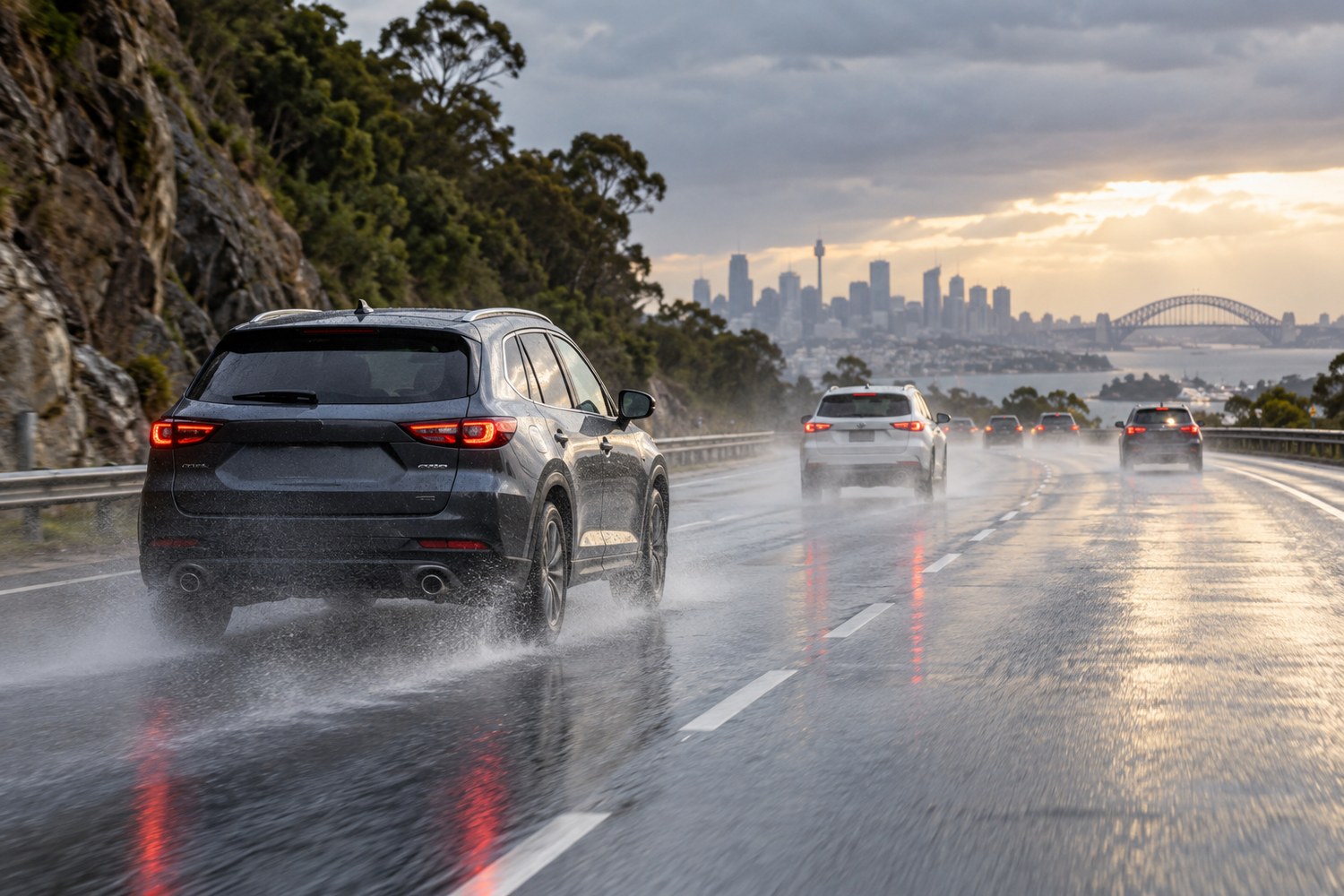
The difference sits in the rubber compound, the carcass built under it, and the testing behind the tread pattern. It shows up in five things a driver can feel.
A mileage warranty is worth less than its headline number, because it is a rebate rather than a promise. Kumho Australia guarantees 80,000 km on two of its 4WD and SUV patterns, and reaching only 90 per cent of that returns 10 per cent of the price. The conditions are strict: registration, correct pressures, a check every 10,000 km at a participating dealer, and the paperwork kept.
- Wet grip. The widest gap, and the one that matters. In the ADAC summer tyre test published in February 2025, eighteen tyres in one size were braked from 80 km/h on a wet surface. The best stopped in 28.4 metres. The worst took around 45. On the Hume in heavy rain, that gap of three car lengths is the whole decision.
- Tread life. Compound choice is a trade-off, not a quality ladder. A soft, grippy compound wears faster. A hard, long-life compound grips less on a wet road. The money at the top end buys one that does more of both.
- Road noise. Quieter tyres come from tread patterns designed to break up the hum, and that design work costs money.
- Rolling resistance. A tyre that rolls more easily uses less fuel, small per tank and real across a set.
- Sidewall construction. A well-built sidewall survives a hit that splits a thin one, and the unsealed roads north of Wallan are full of sharp edges, loose stones and pothole lips. The sidewall splits we see are almost always on the thinnest tyre on the car.
The load index and speed rating moulded into the sidewall are a separate question from price tier. So is tread type, and the choice between all-terrain and highway-terrain tyres is covered on its own.
Budget, mid-tier and premium: what each tier gives you
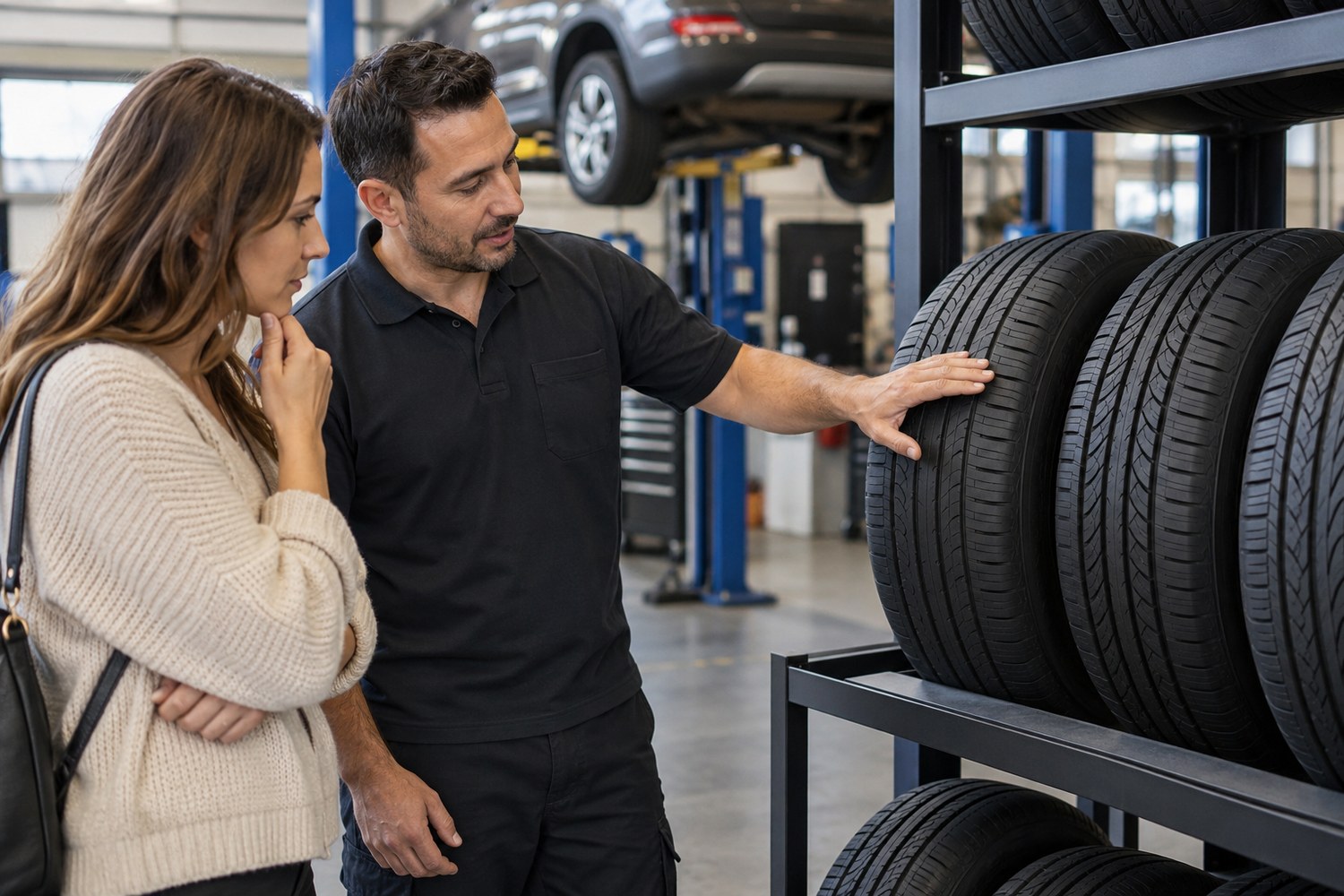
Budget tyres are the cheapest thing that meets the standard, usually from a maker you have not heard of. Mid-tier tyres come from established makers and sit in the middle of their range. Premium tyres are the flagship patterns, where the development money goes. Brand differences are mostly tier differences wearing a badge.
In a common passenger size such as 205/55R16, most of what you will be quoted sits between about $115 and about $215 a tyre fitted, budget at the bottom and premium at the top. That is the market band rather than a quote from us, and a bigger 4WD or light truck size shifts it up.
| Tier | What the money buys | Who it suits |
|---|---|---|
| Budget | A basic compound and carcass. Longer wet stopping, more noise, and often no independent test results. | Low-kilometre cars, second cars, and vehicles near the end of their life. |
| Mid-tier | Most of the wet grip and tread life of a premium tyre, from a maker whose test results you can find. | Most cars, most drivers, most of the time. |
| Premium | The shortest wet braking, the quietest ride, the lowest rolling resistance and the strongest sidewalls. | Heavy vehicles, tow vehicles, high annual kilometres and wet highway running. |
Whichever tier you land on, keep both tyres on an axle the same. Two different tyres on one axle grip differently under brakes, and the car pulls to the side with more grip. Whether that means buying two or all four is a separate question, and when your tyres need replacing is covered in full elsewhere on the site.
Are premium tyres worth the money?
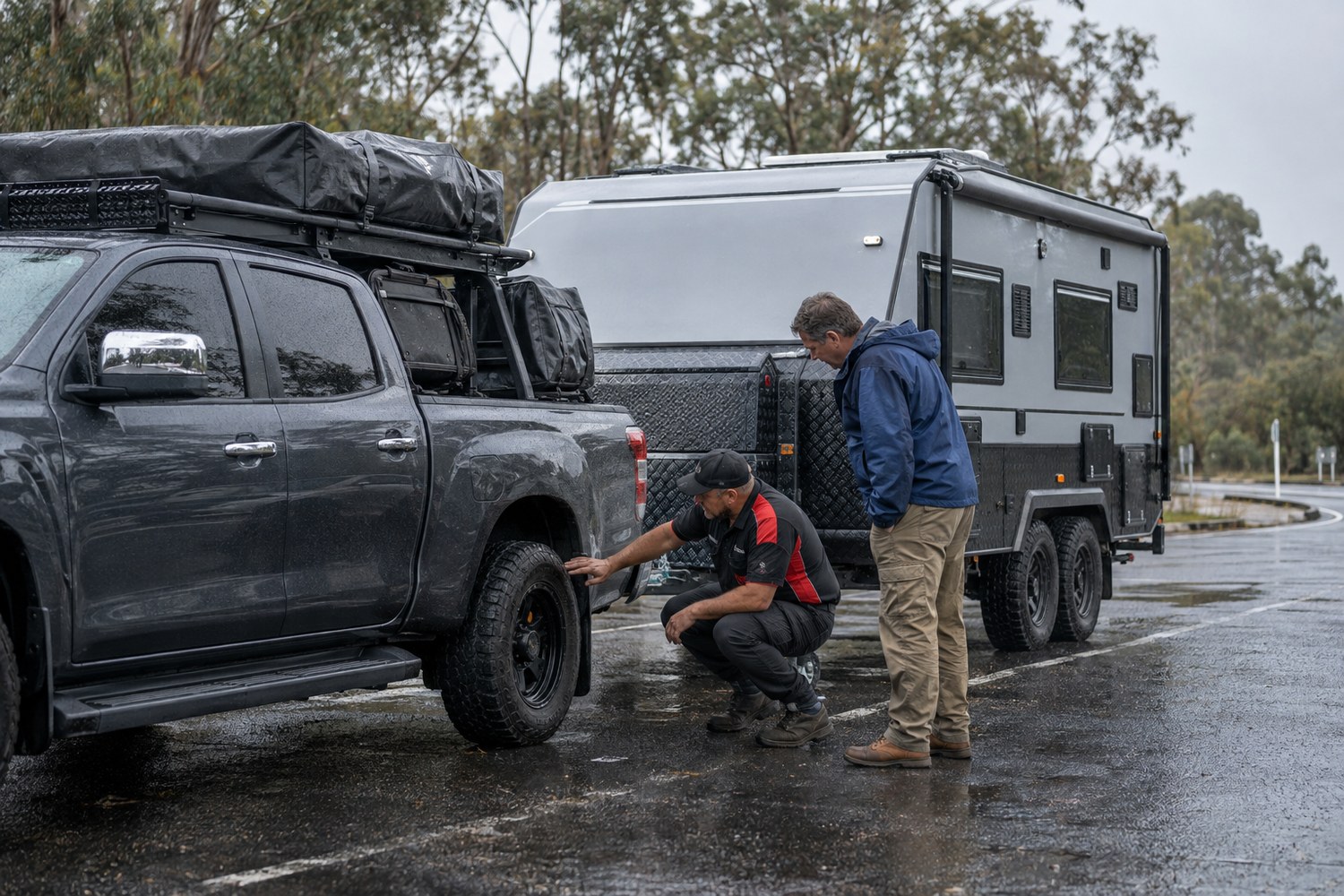
For most drivers, no. A mid-tier tyre from a maker with published test results gets you close to premium wet grip and tread life for a good deal less. That same ADAC test makes the point: several mid-range tyres rated as good, and one of the cheapest failed outright.
Mid-tier is the right answer for most cars most of the time. Premium earns its money when weight, speed or water are working against you.
Premium is worth paying for when the tyre is asked to do more. A loaded 4WD or dual cab puts far more weight through each tyre than a small hatch. Towing a caravan, a boat or a work trailer adds sustained load and heat, and heat is what finds a weak sidewall. High annual kilometres change the sum too, since a tyre lasting a third longer is bought a third less often. Wet highway running is where the braking gap is widest.
If two or three of those describe your driving, buy the better tyre. If none of them do, leave the money in your pocket.
When a budget tyre is the right call
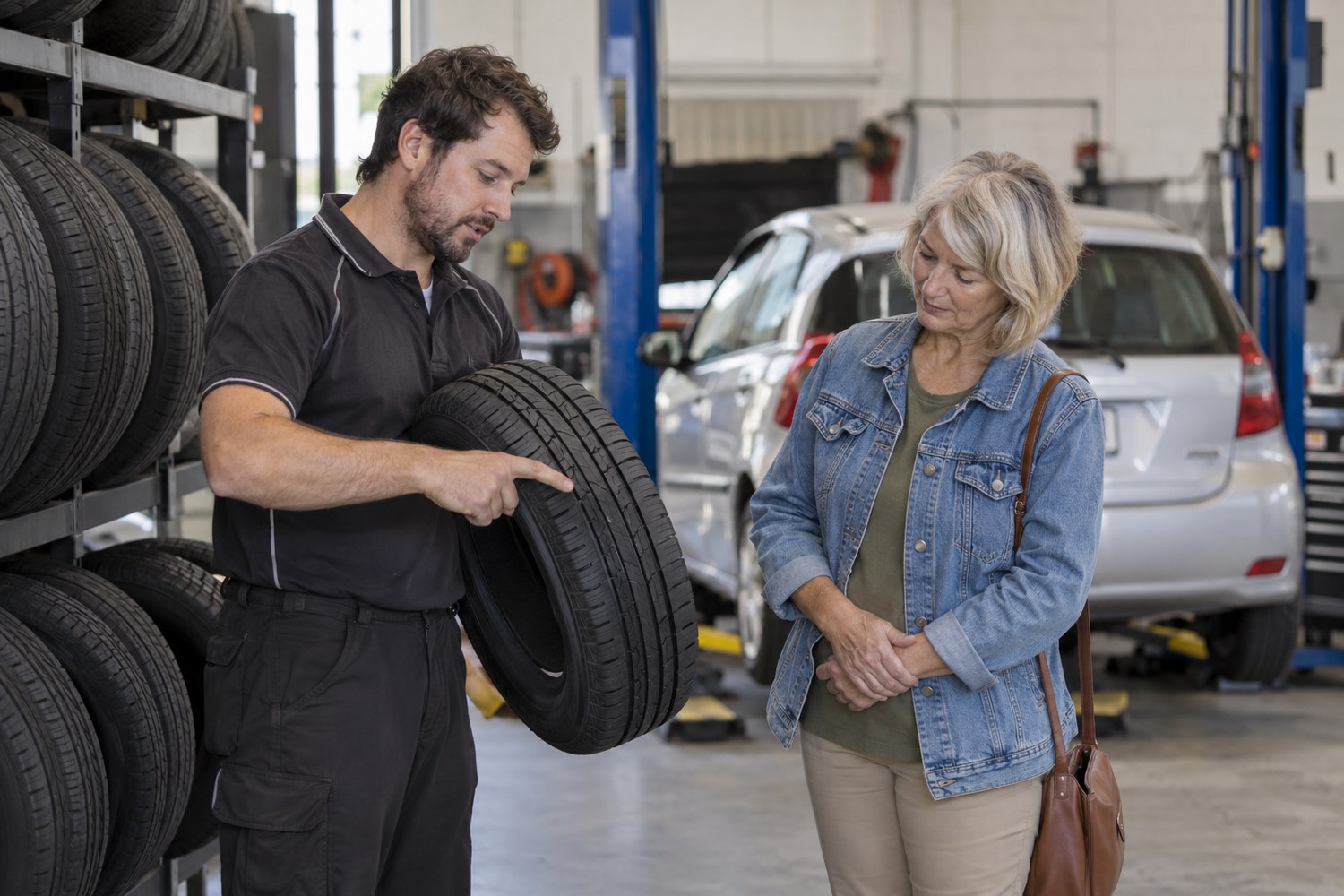
Sometimes it is the right call. A car doing 5,000 km a year to the shops and the station will age its tyres out before it wears them out. Paying premium money for grip you will use twice a year is waste, not thrift. The same goes for a second car, or a car you expect to sell or scrap within a year or two.
There is a floor, though. Buy from a maker you can look up, whose tyres turn up in a published test. The failing tyre in that ADAC test cost about the same as several that passed.
How to check how old a new tyre is
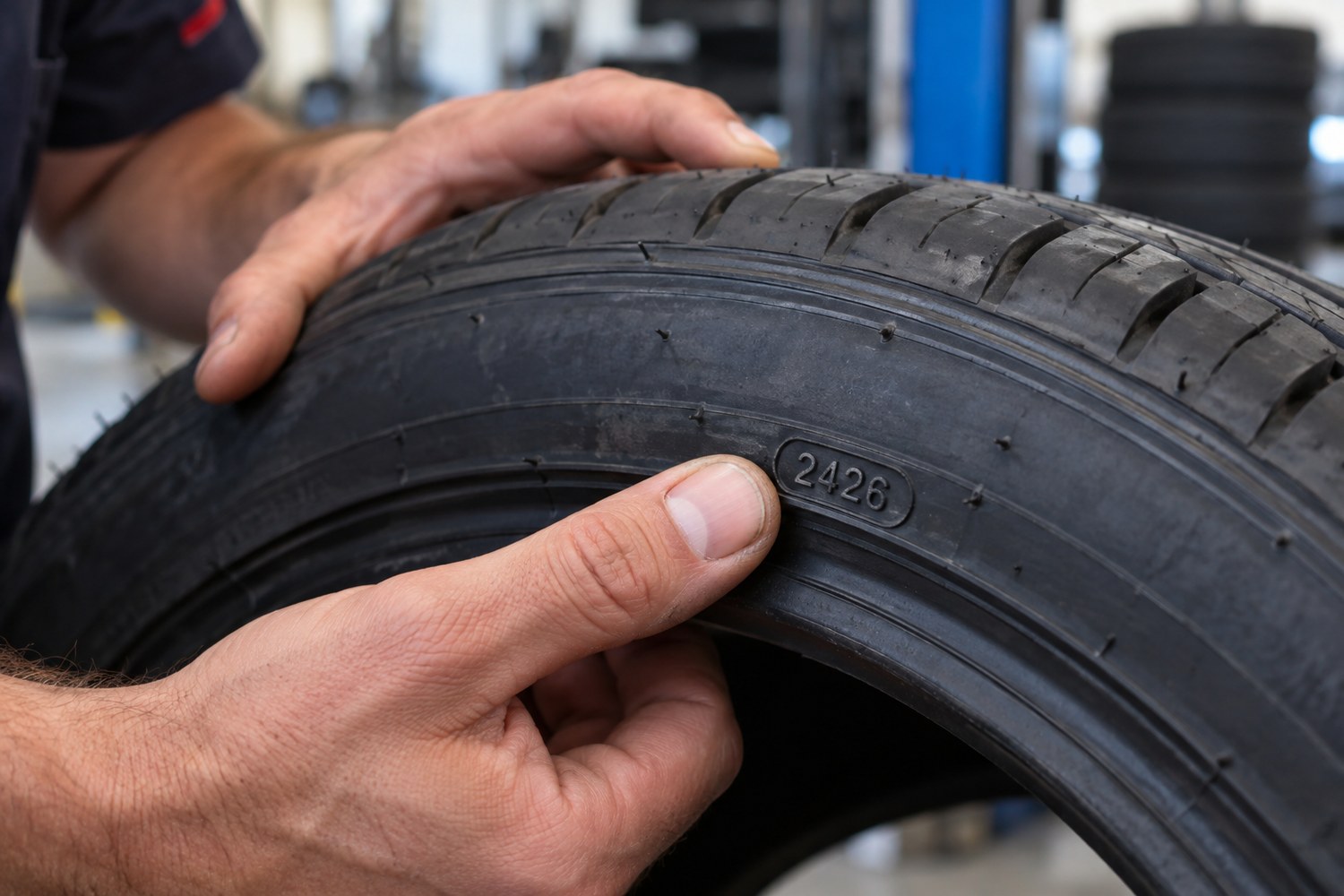
Every tyre carries a four-digit code moulded into the sidewall, inside an oval. The first two digits are the week it was made. The last two are the year.
A tyre stamped 2426 was built in the twenty-fourth week of 2026, so around the middle of June. The code often sits on the inner face, so you may have to look at both sides for it.
A tyre that has sat in a warehouse for two years is not new in the way most buyers assume, even though the tread has never touched the road.
Be careful how far you take that. Tyre makers argue a correctly stored tyre performs like a fresh one for years, and there is no Australian law setting a maximum age for a tyre on the road. The Australian Tyre Industry Council’s guidance is that tyres come out of service at ten years whatever the tread looks like. The date code is not a safety alarm. It tells you how much usable life you are being sold.
Ask what the code says before the tyre goes on the car. If the stock is more than a couple of years old, that is a fair thing to raise and to ask a discount on.
What a tyre quote should include
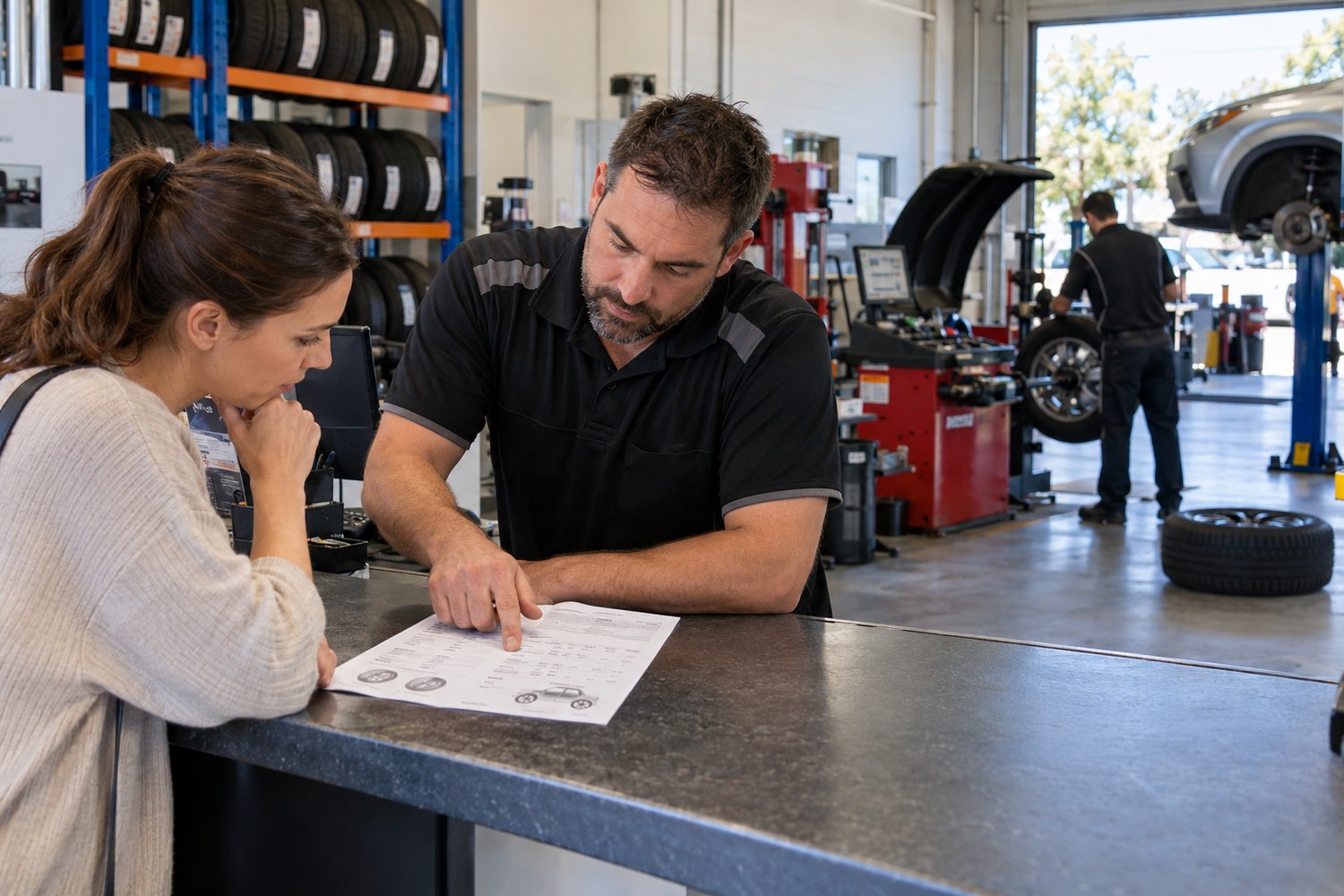
A tyre quote is not one number. Comparing two on the tyre price alone is how people get surprised at the counter, so ask for it line by line.
Fitting, balancing and disposing of the old tyres are all part of the job at this end, so ask any workshop which of those lines sits inside the quoted price and which sits outside. Two quotes only become comparable once you know.
- The tyre itself. Per tyre, and whether the price is each or for the set.
- Fitting and balancing. Charged on its own this runs about $15 to $30 a tyre. It is often already inside an advertised fitted price.
- Valves. A new rubber valve is normally included. If the car has tyre pressure sensors, the metal service kit for those is charged on its own, so ask what it adds.
- Disposal of the old tyres. A small charge, usually bundled into the fitting.
- Wheel alignment. Sometimes included, more often a separate line of about $80 to $150, and more again on a 4WD or SUV.
- GST, and whether the figures already carry it.
Two things to ask when you ring around, then. Ask for the quote itemised, so you compare the same work, and ask what week the tyres on the shelf were made. A good tyre shop will answer both without fuss. If you would like ours in writing, send through the size off your sidewall and we will price the lot. Service Plus is open in Wallan Monday to Friday, 8am to 5pm.
Frequently asked questions
How old can a tyre be before you should refuse it?
There is no fixed cut-off, and stock a year old is normal. Past a couple of years on something sold as new, you are buying less remaining life than the price suggests, so it is fair to push for a fresher set.
Is it a problem to fit a cheaper tyre than the ones already on the car?
Across the front and rear it is workable. On the same axle it is not, because the two wheels then behave differently the moment you brake hard.
Is a tread-life warranty worth anything in practice?
It has some value, but less than the advertised number implies. You are offered a slice of your money back if the tread runs short, and only if you can produce the servicing and pressure records the maker asks for.
How much of a tyre quote is fitting rather than the tyre itself?
On an ordinary passenger size the labour is a modest share next to the tyre price. It matters most when one quote is tyre-only and the other is fitted.
Do cheap tyres wear out faster than premium ones?
Often, but not always. Because compound choice is a balance rather than a ranking, a hard-wearing cheap tyre can outlast a soft expensive one and still stop worse in the wet.

