
A tyre can look fine from a few metres away and still be close to finished. You might notice it before a Hume Freeway run, caravan trip, or roadworthy inspection.
Tyres usually need replacing when tread is near the legal minimum, rubber is old or cracked, there is sidewall damage, a puncture is unsafe, the vehicle vibrates, or uneven wear has reduced grip.
At Service Plus Tyre & Auto in Wallan, tyres are checked against how the vehicle is used. A commuter, towing 4WD, and gravel-road ute can all wear tyres differently.
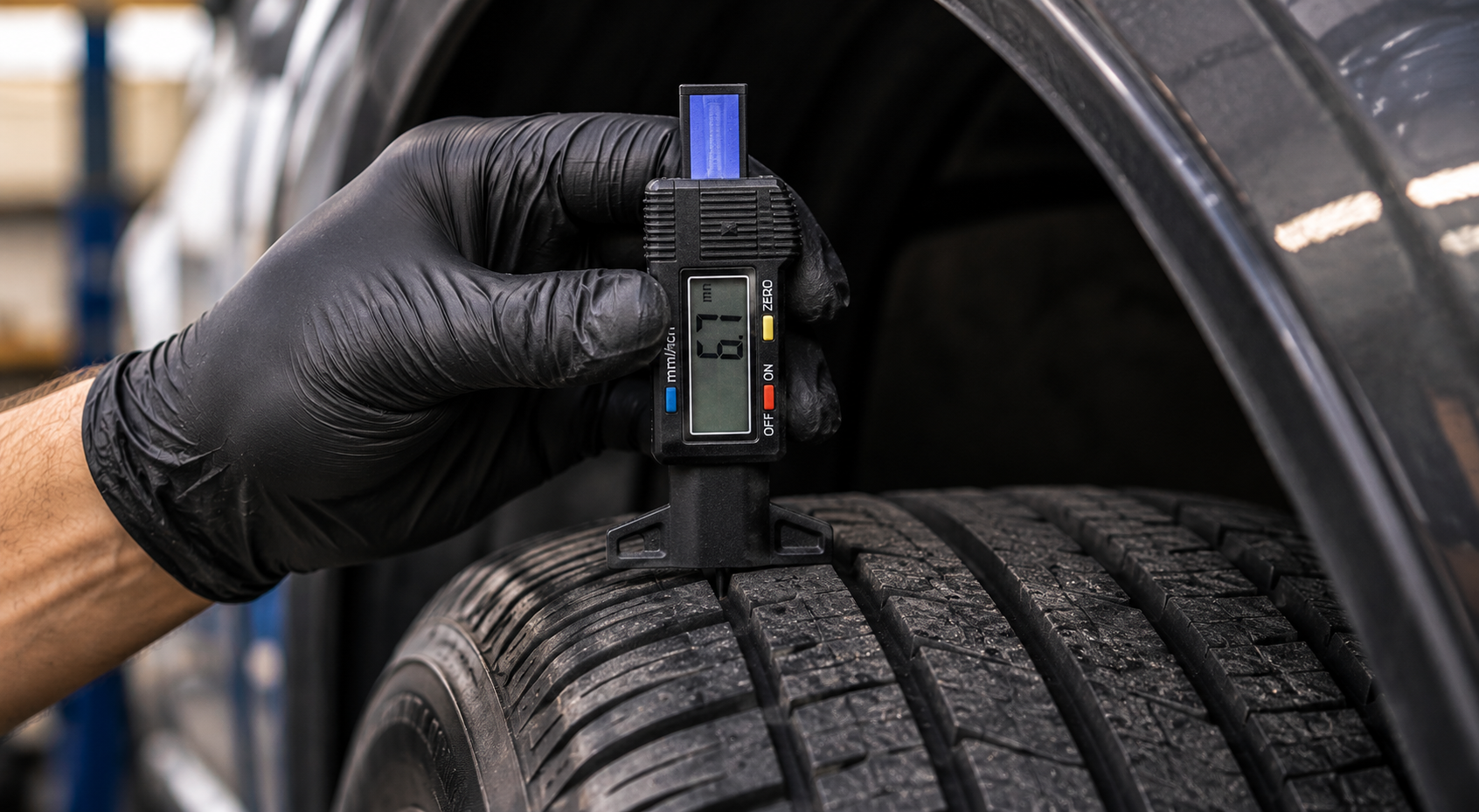
What is the quick way to check your tyres?
The quick tyre check is to look at tread depth, sidewall condition, pressure loss, vibration, and wet-weather grip. A tyre need not be bald before it becomes a problem.
- Tread is close to the wear bars or looks shallow across the main grooves
- Rubber is cracked, dry-looking, split, or perished
- There is a sidewall bubble, bulge, cut, or exposed cord
- The tyre keeps losing pressure after being pumped up
- A puncture sits close to the shoulder or sidewall
- The car vibrates, pulls, or feels less secure in rain
If several apply, book a proper inspection. A Wallan tyre centre should check the tyre, alignment, pressure, balance, and suspension before giving a replacement answer.
Is tread depth the only thing that matters?
Tread depth matters, but it is not the whole tyre story. In Victoria, Transport Victoria says tyres must have at least 1.5 mm of tread depth in all principal grooves, except at tread wear indicators. The tread must also not be worn until a wear indicator contacts the road.
That is the legal line, not a full safety guarantee. A tyre can still have 1.5 mm of tread and perform poorly in wet weather, especially under braking, towing load, or freeway speed.
Regional commuting, gravel roads, winter rain, caravan towing, and 4WD touring all put extra demand on tyres.
What tyre damage means replacement is likely?
Some tyre problems can be repaired. Others usually mean the tyre should come off the car.
| What you can see or feel | What it may mean | Likely next step |
|---|---|---|
| Sidewall bulge or bubble | Internal casing damage | Replace the tyre |
| Deep sidewall cut | Damage outside the repairable area | Replace the tyre |
| Cracking or perishing | Aged or sun-damaged rubber | Inspect, likely replace if advanced |
| Exposed cords | Structural tyre damage | Replace immediately |
| Puncture near shoulder | Too close to the edge | Inspect, likely replace |
| Repeated pressure loss | Puncture, valve leak, rim leak, or casing issue | Inspect before deciding |
| Vibration at speed | Balance issue, tyre damage, uneven wear, or wheel fault | Check tyre and wheel balance |
| Feathered edge wear | Alignment, suspension, or steering issue | Check alignment and tyre condition |
Do not keep driving on a tyre with a bulge, exposed cords, or a deep sidewall cut. Those faults are not cosmetic.
Can a punctured tyre be repaired?
A punctured tyre can sometimes be repaired if the damage is in the repairable tread area and the tyre casing is sound. Transport Victoria says repairs are only allowed in the crown area of the tyre, not the bead, sidewall, or shoulder.
The tyre should also come off the rim so the inside can be checked. A puncture is less likely to be repairable if the tyre has been driven flat, the hole is too large, the casing is damaged, a previous repair has failed, or the tyre is old and cracked.
That is why tyre puncture repair in Wallan should be checked properly, not guessed from where the nail sits.
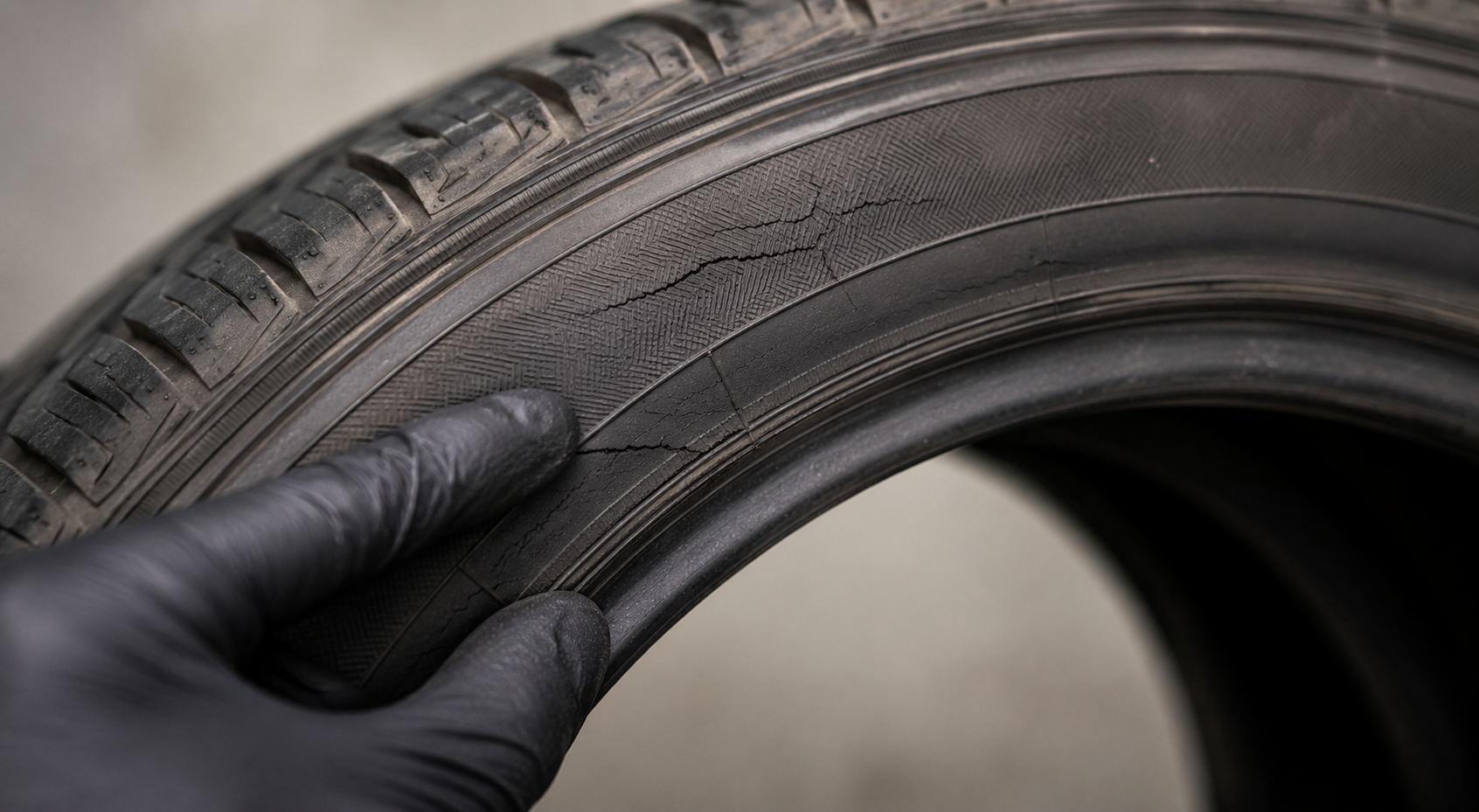
Why do some tyres wear out faster on one side?
One-sided tyre wear usually means the tyre is not sitting squarely on the road. The common causes are wheel alignment, worn suspension, steering wear, incorrect pressure, or regular towing load.
If one edge is already worn too far, the tyre may need replacing even if the rest of the tread looks reasonable. Replacing the tyre without correcting the cause just starts the same problem again.
This is where wheel alignment in Wallan becomes part of the tyre decision. If the car pulls, the steering wheel sits off-centre, or the tyres are wearing in a pattern, alignment and suspension should be checked before new tyres are fitted.
Should you replace two tyres or all four?
You do not always need four tyres, but the right answer depends on the vehicle, tyre condition, tread depth, and drivetrain.
On many two-wheel-drive cars, replacing a pair is acceptable if the other two tyres are safe and similar in condition. Tyres should be matched across the same axle so the left and right tyres have similar tread depth and grip.
AWD and some 4WD vehicles are more sensitive to tyre diameter differences. That does not mean every 4WD automatically needs four tyres, but towing load, tyre size, remaining tread, and vehicle type all matter.
When should Wallan drivers get tyres checked?
Get your tyres checked while there is still enough tread left to make a calm decision. The best time is before the trip, not after the steering starts shaking on the freeway.
- Before a roadworthy certificate inspection
- Before towing a trailer or caravan
- Before winter, heavy rain, or a long Hume Freeway drive
- After hitting a pothole or kerb
- When the steering pulls or the car vibrates
- When relying on an old spare tyre
Service Plus Tyre & Auto can check tread, pressure, tyre age, punctures, wheel balance, alignment, and suspension at the Wallan workshop. If replacement is the smarter call, they can fit tyres suited to the way the car is used.
Frequently asked questions
In Victoria, tyres need at least 1.5 mm of tread depth in the principal grooves, except at tread wear indicators.
Yes. A tyre can be above the legal minimum and still be unsafe if it has cracking, sidewall damage, uneven wear, poor wet grip, or age deterioration.
No. Sidewall, shoulder, bead, large, internally damaged, or previously failed puncture repairs usually mean replacement.
You should consider it if the old tyres wore unevenly, the car pulls, the steering wheel sits off-centre, or suspension work has been done.
Sometimes. AWD and 4WD vehicles can be sensitive to tyre-size differences, so the decision should be based on the vehicle, tyre type, remaining tread, and use.

