
A hum or drone that rises and falls with road speed, rather than engine speed, is usually one of two things: a wheel bearing or the tyres. The quickest way to separate them is to load the wheel. Hold a steady speed on a quiet road, then steer gently one way and then the other. A worn bearing gets louder when the car’s weight moves onto it. It goes quiet again when the weight comes off. Tyre noise does not change either way.
You probably first heard it out on the Hume, sitting on a hundred with the radio off. Around town it fades, so it is easy to put off. Most people have already blamed the tyres by the time they ask.
What a failing wheel bearing sounds like
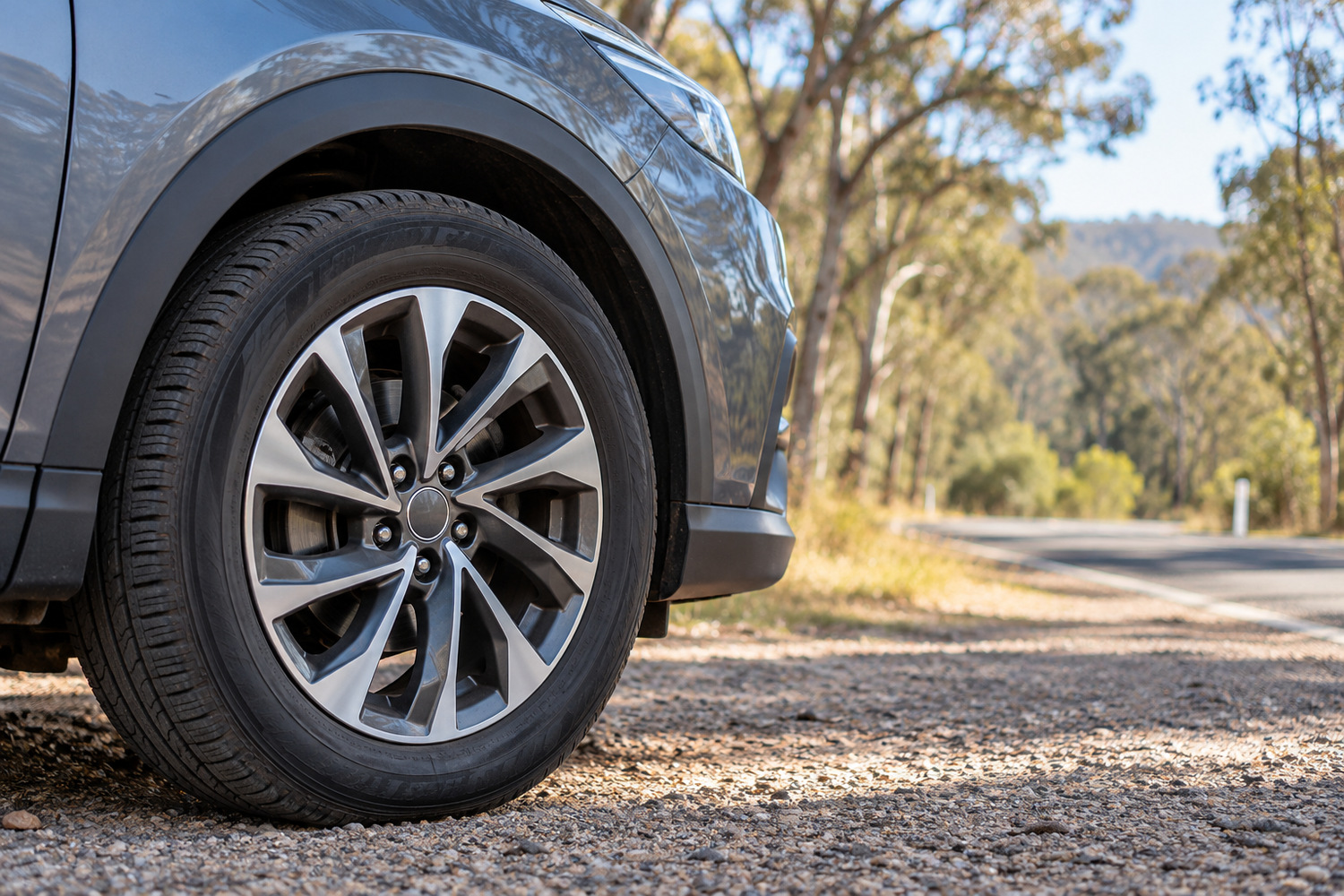
A wheel bearing is what the wheel spins on. It is a sealed set of hardened rollers or balls, running in grease inside the hub.
Bearings rarely fail overnight. The noise comes in stages, and the stage it has reached tells you how urgent it is. It starts as a faint drone you notice only at speed with the radio off. Then it is a hum you hear over the radio. Then a growl. At the end it is a grinding rumble you feel through the floor.
The useful part is what the noise answers to. It tracks road speed, not engine speed. Change gear and the note does not move. Lift off the accelerator and it stays put. Slow down and it fades with the speed.
Unsealed roads wear bearings faster, because dust works its way in past the grease. Plenty of side roads around the shire are loose surface, so a bearing here can start talking earlier than the kilometres suggest.
Of all the noises a car makes at speed, a bearing hum is the one most often blamed on the tyres.
Is it the wheel bearing or the tyres?
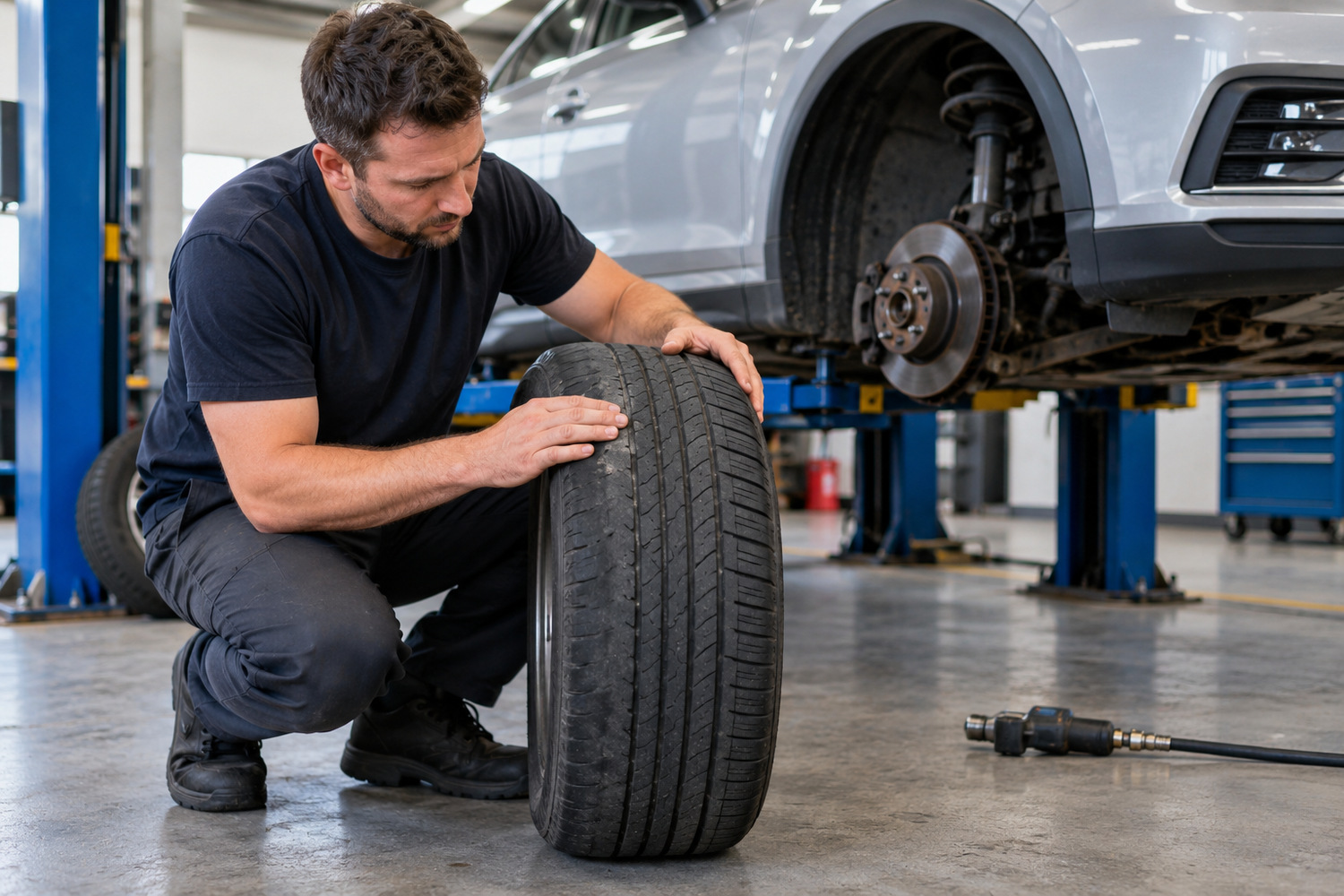
Tyres and bearings get confused because both turn whenever the car moves. Two tests separate them, and the first one you can do yourself.
Both tests point. Neither proves. A tyre worn into a scalloped pattern can hum convincingly. A bearing early in its life can hide under road noise on a coarse surface.
- The load-transfer test. Pick a quiet road with nothing behind you. Hold a steady speed, steer gently one way, and let the car drift about a lane’s width. Then do the same the other way. Keep both hands on the wheel, and keep it gentle: this is a drift, not a swerve. Weight moving onto a worn bearing usually makes it louder. Weight coming off usually makes it quieter. A hum that grows turning one way and fades turning the other points at the bearing on the loaded side. Tyre noise ignores all of it.
- Swapping the tyres around. Tyre noise travels with the tyre. Move the wheels from the front of the car to the back and drive it again. If the noise moved with them, it was the tyre. A bearing stays in the hub, so it stays where it was. For most people that is a workshop job rather than a driveway one, and it is worth doing if the first test was not clear.
| What you did | What you heard | What it points at |
|---|---|---|
| Steered gently one way at a steady speed | The hum got louder | The bearing on the side the weight moved onto |
| Moved the wheels from front to back | The noise moved with them | A tyre |
| Moved the wheels from front to back | The noise stayed where it was | A bearing, or another part that stays put |
| Changed gear, or lifted off the accelerator | The note changed | Something driven by the engine, not by the road |
What else hums, drones or grinds at speed
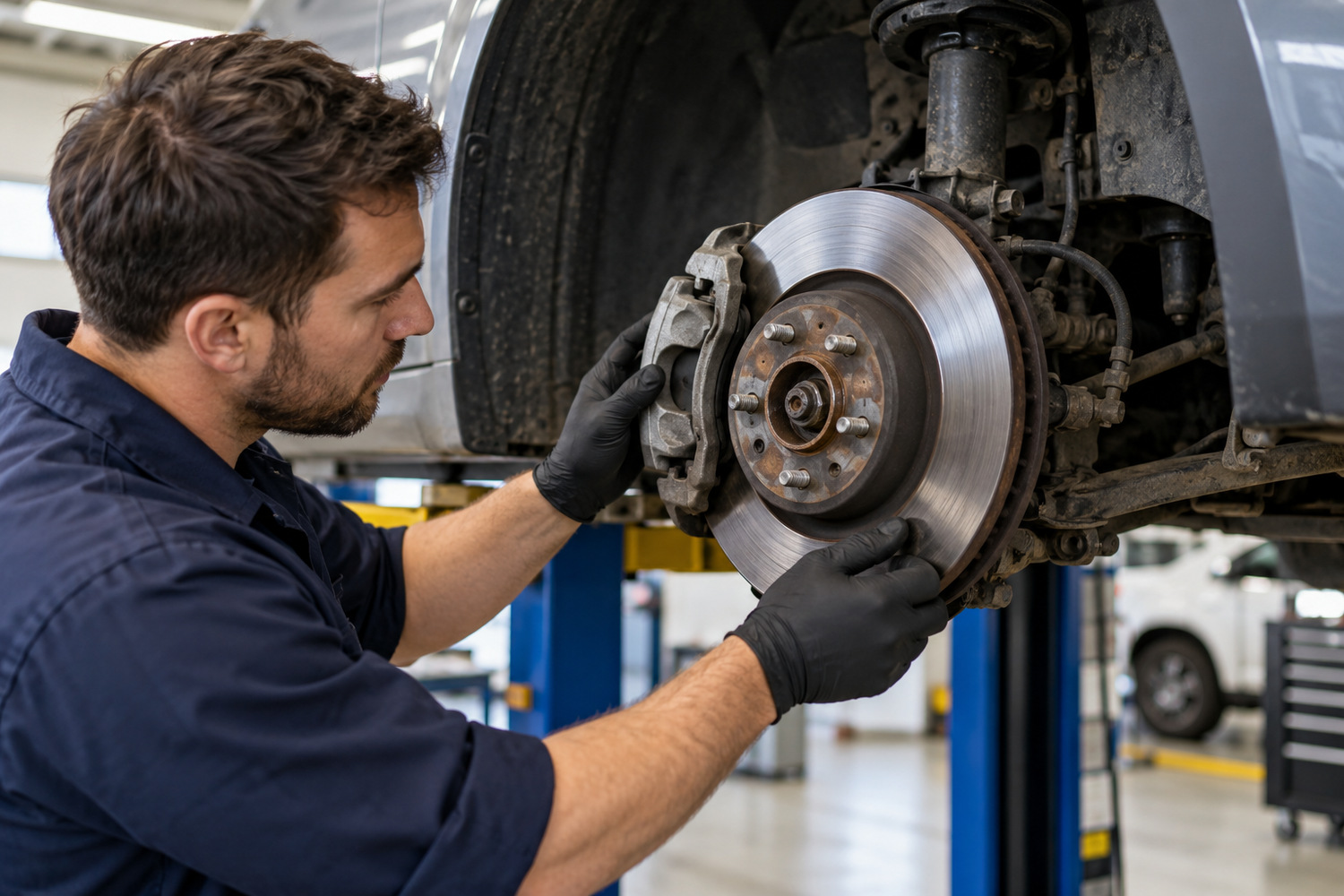
A bearing is the usual answer, not the only one. Four other things make the same kind of noise.
- Tyres worn into a cupped or scalloped pattern. Worn tread can hum on its own, with no bearing involved. The tread is what settles that, and there is a separate guide to what the wear pattern on a tyre is telling you.
- A brake pad dragging on a disc. A pad that does not release cleanly from the disc, or rotor, makes a rush or a light grind. It changes the moment you touch the brakes.
- A joint in the driveline. The shafts that carry drive to the wheels have joints in them. A worn one can hum or vibrate above a certain speed. It answers to load rather than steering, so the accelerator changes it more than the wheel does. If a shake through the seat has come with the noise, there is a separate article on a car shaking at high speed.
- A differential or gearbox whine. The differential, or diff, splits the drive between the two wheels on an axle. Worn gears in the diff or in the gearbox can whine. The note climbs with road speed, but it shifts on and off the accelerator.
Is it safe to keep driving?
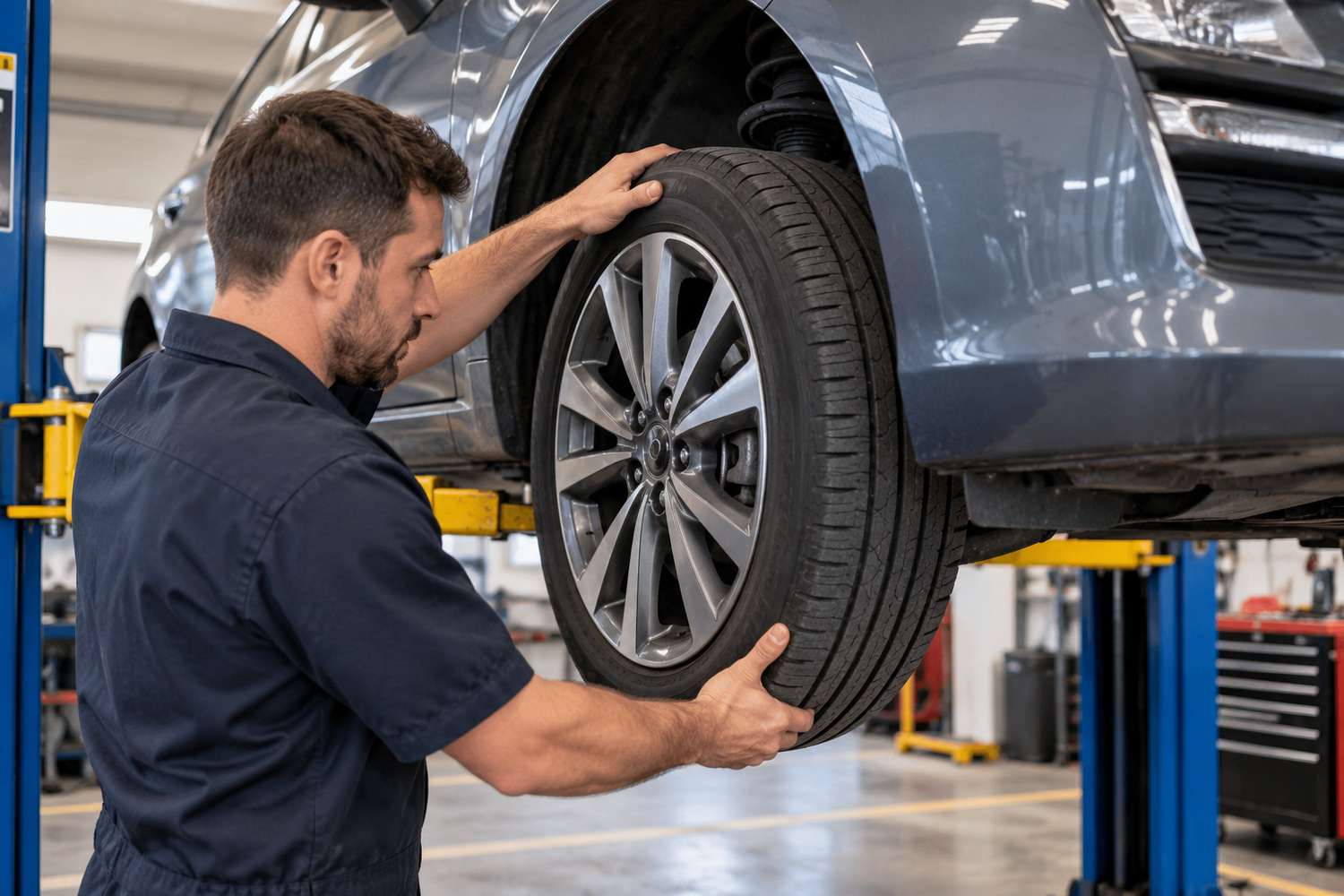
That depends on the stage, and most stages are not an emergency.
A faint drone is something to book, not something to panic about. That is the version with no looseness at the wheel, and no change in the braking or the steering. Drive it normally until the appointment.
These are the reasons to have it looked at before you drive any further:
- Play or looseness you can feel when the raised wheel is rocked by hand.
- A grinding rumble that changes as the car is steered.
- Heat coming off one wheel hub after a drive while the others are cool.
- A noise that has got worse over days rather than months.
There is a roadworthy consequence as well. Victoria’s roadworthiness requirements for cars and other light vehicles are published in Vehicle Standards Information 26, issued in March 2023. It is what a licensed vehicle tester works to. Its steering and suspension section asks that the joints, bushes, pivots, seals, wheel bearings and mountings all be in good condition. So a worn wheel bearing is a roadworthy failure, not something to leave until the car is sold.
People want to know how much play is too much. There is no millimetre figure, and that is not the tester being vague. The same requirements ask that steering and suspension be free from wear or play beyond the limits the vehicle’s own maker sets. So the measurement is against your car, not one number for every car.
What a workshop does to confirm it, and what to tell them
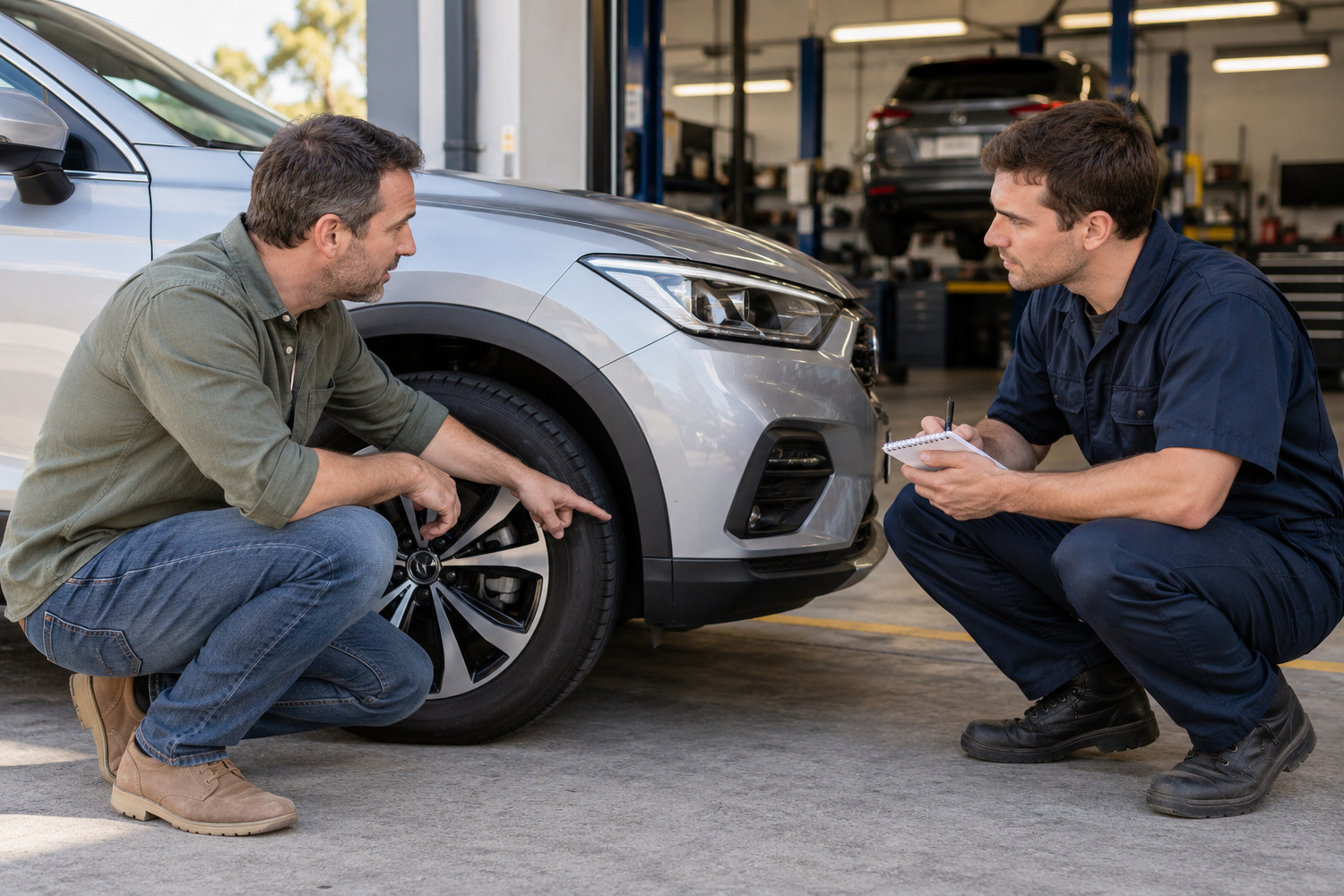
The check is quick and most of it is done by hand. The car goes up on a hoist. Each wheel is spun to listen for roughness, and rocked to feel for play. What the car does on the road is then matched to what the wheel does in the air. A bearing is judged on what it does, not on how it looks. One that sounds terrible can look clean from the outside. If the noise turns out to be a worn joint or a tired damper, that sits with the rest of the suspension and steering work.
A noise that is obvious to the driver at a hundred can be silent on a hoist in a quiet workshop.
That is why what you say at drop-off matters more here than on most jobs. Four things are worth writing down before you go:
- The speed the noise starts at, and whether it fades again above that speed.
- Whether it changes when you steer, and which way makes it louder.
- Whether anything happened just before it started: new tyres, a kerb, a pothole, a long run on loose surface.
- How long it has been there, and whether it got worse in days or in months.
If the hum is still there, book it in for a road test with someone in the passenger seat. Service Plus in Wallan is open Monday to Friday, and you can ask for a quote before the work goes ahead.
Frequently asked questions
Does a wheel bearing noise change when you turn?
Usually, yes, and that is the most useful thing about it. A bearing carries more of the car when the car leans on it. The extra load makes a worn one noisier. If the wear is only just starting, the change can be too small to pick up.
How long can you drive on a wheel bearing once it starts humming?
Nobody can give you a distance, and anyone who does is guessing. Some hum for a long while and get no worse. Others move from a hum to a growl quickly. The rate of change is the thing to watch, rather than the kilometres.
Will a wheel alignment fix a humming noise?
No. An alignment sets the angles the wheels sit at. It does not change the condition of a worn part. A bearing that has started making noise will go on making it afterwards.
Is a noisy wheel bearing a roadworthy failure in Victoria?
If the bearing is worn, yes. The written requirements a tester works to call for it to be in good condition. Noise is normally the first sign that it is not. That puts it with the faults that have to be put right before a certificate can be issued.

