
You are on the shoulder with the hazard lights on, deciding whether to drive the car home or wait for help. Something has gone wrong, and you need a clear answer before moving.
Whether you can drive the car depends on three things. Can you control it safely? Can it run without risking further serious damage? Is it fit to be on the road? If any answer is no, stop somewhere safe and arrange help. If you cannot tell, get advice before driving on.
Do not use the distance home as the test. A serious warning can matter even when the workshop is nearby; a minor fault does not become an emergency just because the car needs attention.
Get yourself safe first
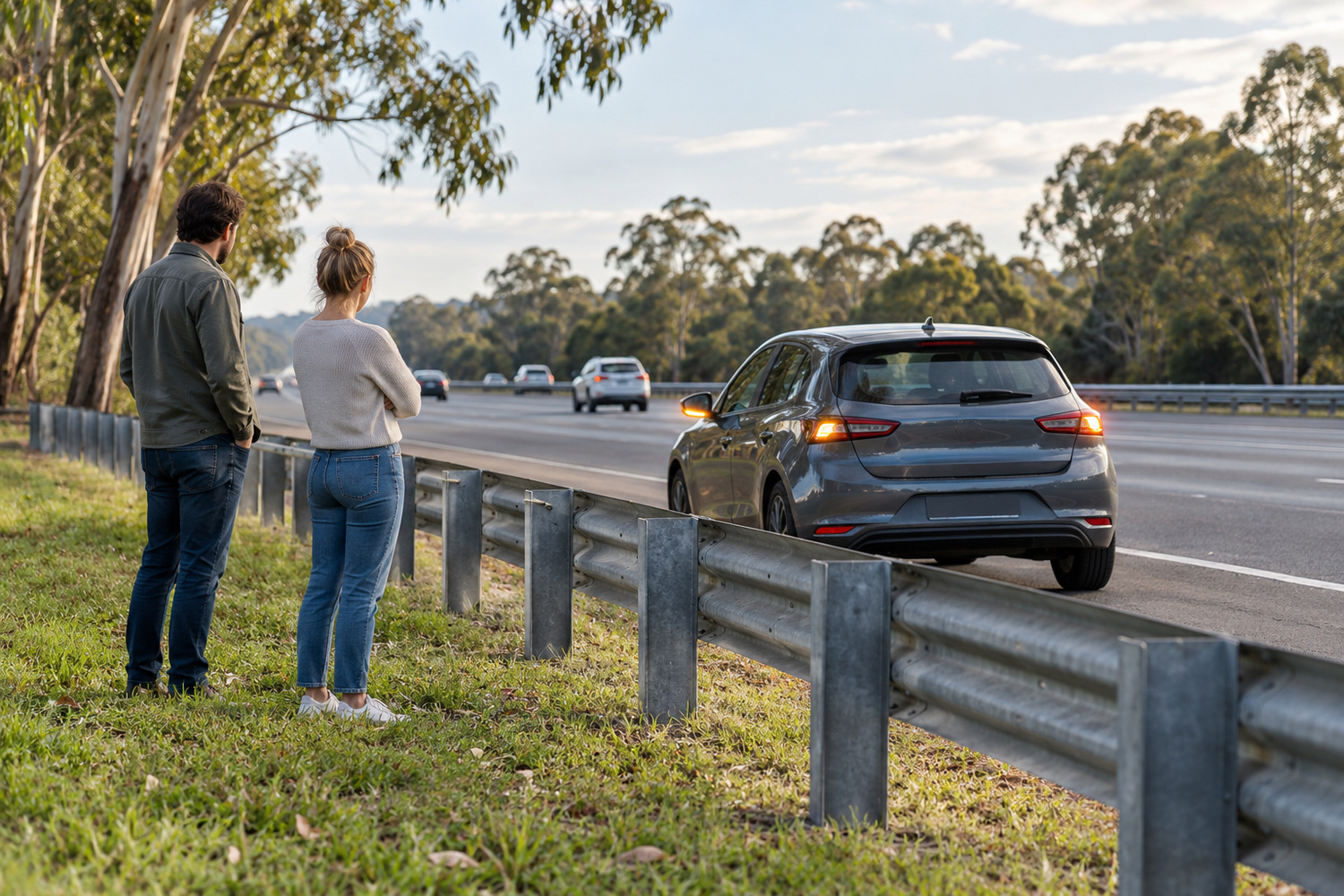
Avoiding danger from traffic comes before checking the car or deciding whether to drive on.
On a Hume Freeway trip near Wallan, assess the space available rather than assuming the shoulder is wide enough. A country road may offer even less room. Getting clear of traffic takes priority over checking a warning light or looking under the bonnet.
- Put the hazard lights on and pull off the traffic lanes if you can do so safely. Do not try to cross a busy road on foot.
- Once safely parked, switch the engine off and keep the hazards on. If waiting inside, keep your seatbelt fastened.
- Only leave the car if it is safe. Check for traffic and use a door away from it. Wait well clear, behind a safety barrier where available; if leaving is unsafe, stay inside.
- If the car blocks traffic on a major road in Melbourne, call 13 11 70 or use a freeway help phone. This incident line clears traffic hazards; it is not your workshop booking service.
- If there is fire or immediate danger, call 000. Follow the emergency operator’s directions.
Do not start a roadside repair while traffic passes close by. Tell the assistance operator whether the car is clear of the traffic lanes and whether everyone has somewhere safe to wait. The position of the car can require urgent help even when the mechanical problem itself is minor.
The faults that mean stop driving now

Stop in a safe place if a warning tells you to stop, or if braking, steering or a wheel feels unsafe. Do not keep driving to identify the cause. The warning instructions in your own handbook take priority over a general list.
- The temperature gauge in the red, or steam from under the bonnet. Stop safely and switch off. Continuing with a severe overheating warning can damage the engine. Do not treat cooling down as proof the fault has cleared.
- The oil pressure light. Stop safely and switch the engine off. Low pressure can cause serious engine damage. A low oil level warning is different, but it also needs the handbook’s instructions; neither is permission to keep driving. Arrange recovery if the pressure warning persists or you cannot establish the required action safely.
- A brake pedal that has gone long or soft. Changed braking needs assessment before another trip. Do not try a drive home to find out whether the brakes still work well enough.
- Smoke or a persistent burning smell. Stop safely. If you suspect fire, get everyone clear of the vehicle and traffic, call 000 and follow the operator’s directions. Do not continue to see whether the smell disappears.
- Steering that has changed suddenly. If the car is difficult to control, stop safely. A gradual drift has its own discussion in a guide to a car pulling to one side; that article cannot clear a sudden steering change for driving.
- A bang or sudden new mechanical noise. Stop and seek advice before continuing. The sound alone does not identify a broken part or tell you whether it is safe.
- A wheel visibly out of position. A wheel leaning or displaced compared with the others needs assessment without further driving. Do not try to straighten it beside the road.
- A charging-system warning while the engine runs. Pull over safely and seek assistance. The engine can stop unexpectedly; do not estimate how far the remaining battery charge will take you.
When a short trip may be possible
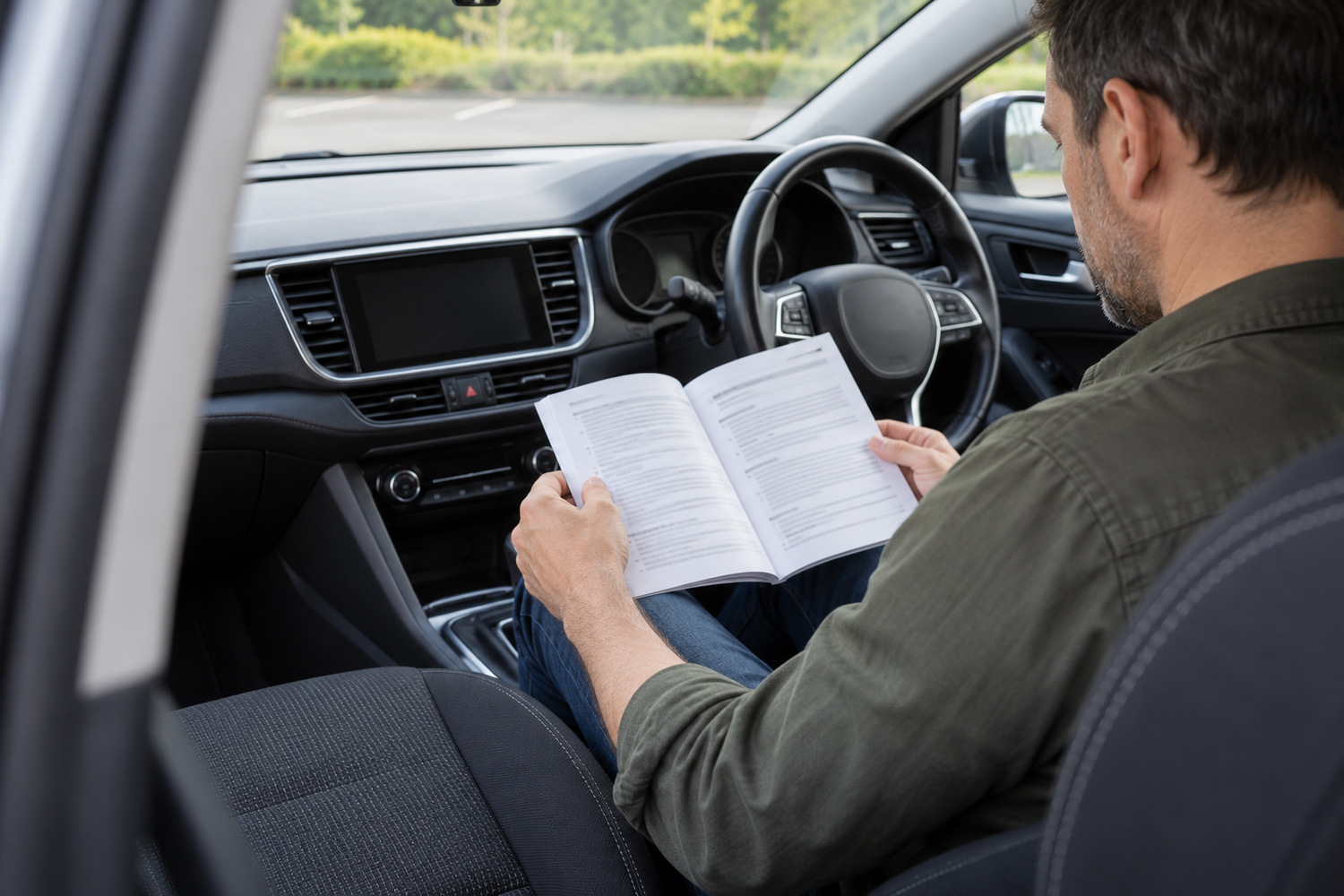
Some faults allow a trip to a repairer, but a list cannot give clearance for an unfamiliar car. Check the handbook and get advice about the exact warning or problem first. Braking, steering, visibility and the tyres must still be safe.
If advice permits driving, agree the destination and any restrictions before setting off. A low-speed trip is not a substitute for that advice, and a route requiring freeway speed may not fit it. Tell the repairer if the only way there involves the freeway.
- A steady check engine light with otherwise normal running. A limited trip may be possible if the vehicle’s instructions allow it. A steady light is not a guarantee: read any accompanying message and seek advice if the car loses power, runs roughly or shows another warning.
- A flat tyre after a suitable spare has been fitted safely. Follow the spare’s label and handbook restrictions. Check the spare is usable before relying on it. Read when your tyres need replacing for the separate replacement question. A leaking tyre is not made safe by calling the leak slow.
- Air conditioning that no longer cools. That alone need not require a tow, provided visibility and the car’s other functions remain safe.
Stop safely if the condition changes. Permission to make a limited trip with one warning does not cover a new smell, changed steering or another warning that appears along the way. You do not need to diagnose the second problem before asking for further help.
How to judge everything in between
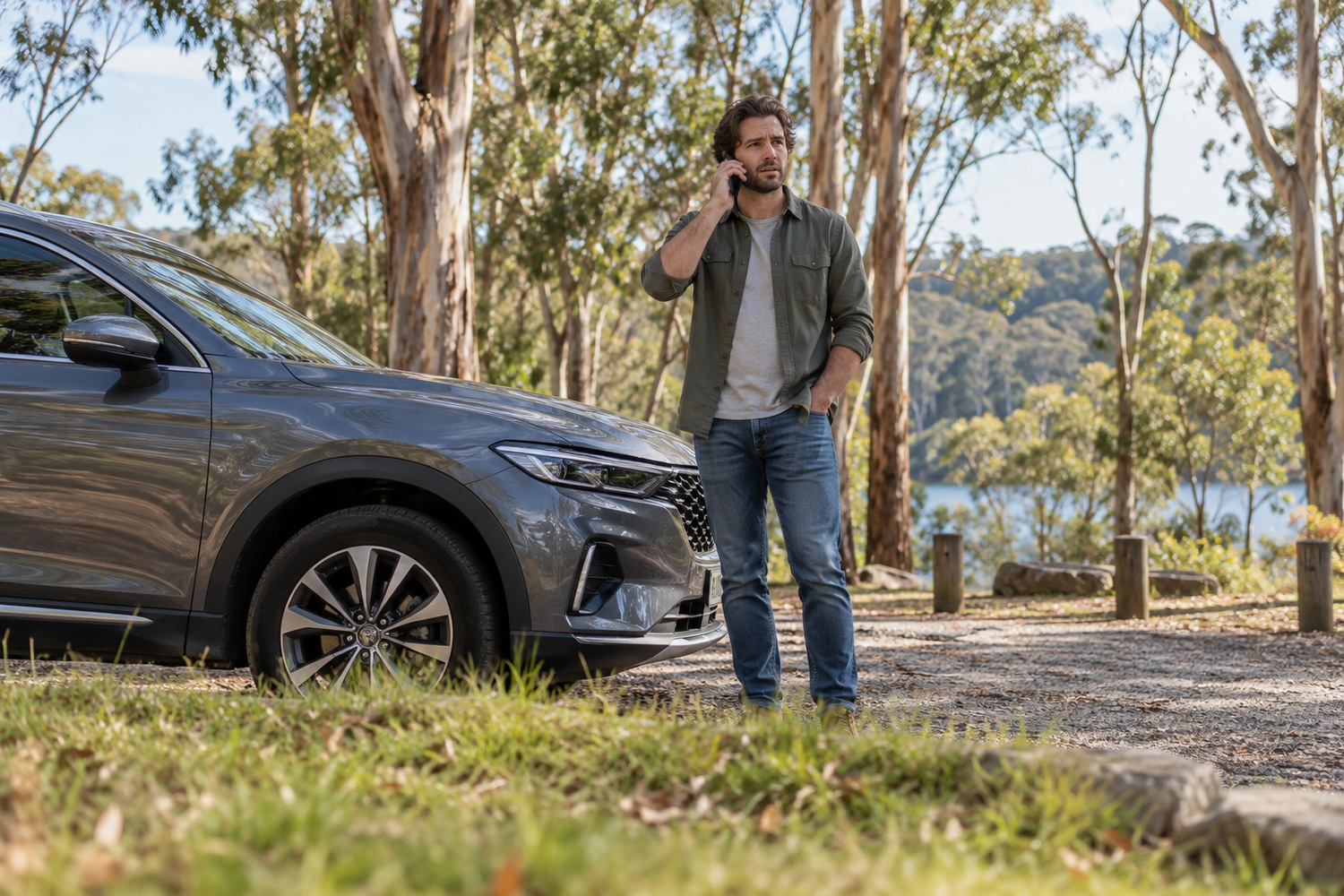
When you cannot identify the warning or judge the car’s condition, ask for assistance before continuing. Being able to steer and stop at this moment does not rule out engine damage or a developing fault. A short drive is not a useful test of whether an unknown problem will get worse.
A flashing engine light can indicate a fault needing urgent attention. Stop somewhere safe, check the handbook and seek assistance. Do not assume every vehicle uses the same instruction or that a steady light becoming flashing is a change you can ignore. Some manufacturer instructions allow limited movement; that is not permission for an unrestricted trip home.
A noise changing with road speed does not identify its cause. Nor does a noise become safe because it has been present for weeks. Keep diagnosis separate from the immediate decision. For that symptom, read a guide to a car shaking at high speed. It does not replace advice about the car in front of you.
Treat an unexplained smell the same way: describe it and ask what to do. Its disappearance does not prove the cause is harmless. If it returns, grows stronger or comes with smoke or changed operation, stop safely rather than repeating the journey to gather more clues.
Do you need roadside assistance or a tow truck?

Roadside assistance and a tow booked directly are two different things.
Roadside assistance may assess a breakdown or arrange recovery, depending on the product. A tow booked directly is a separate transport job. Ask the operator to confirm the destination and arrangements rather than assuming either option includes the repair.
Check the product documents for any breakdown-recovery benefit and its limits. Roadside cover and car insurance are different products, and the word towing on one document does not establish the same benefit on another. Check the applicable terms before you need them, including any destination, distance or authorisation conditions. Do not assume an insurance policy includes breakdown recovery.
Where should you have the car towed to?
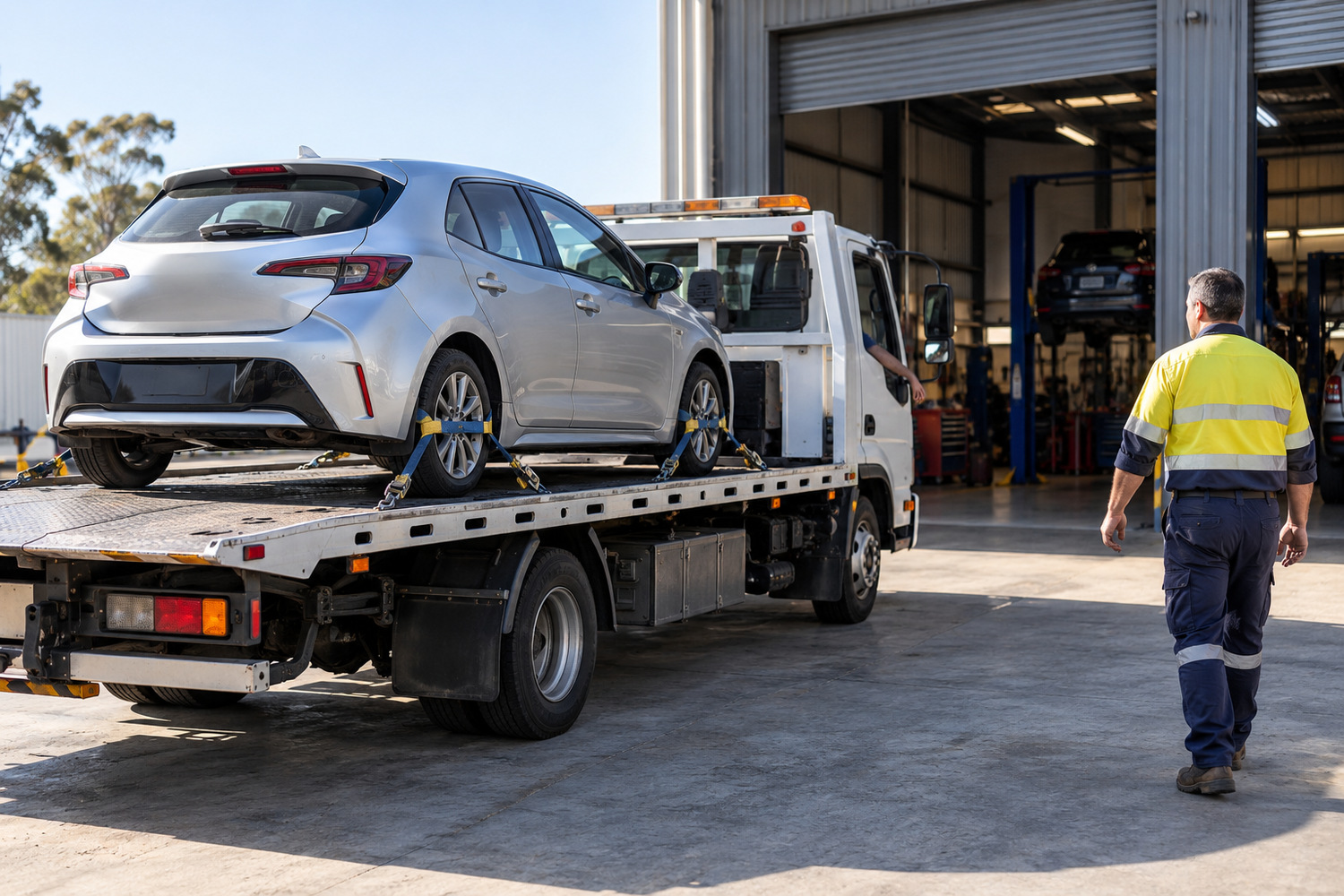
Where practical, arrange delivery to a workshop that has agreed to receive and assess the car. Confirm that destination with the assistance provider or tow operator. If traffic safety requires an initial move elsewhere, follow the incident responder’s directions first.
A car delivered somewhere that cannot take the job may need another move. Ringing ahead can help avoid that, but traffic conditions or recovery terms may still require an initial move elsewhere.
Confirming the receiving workshop matters more than choosing a destination by distance alone.
Ring the workshop before the truck is booked. Ask whether they can take the car and what arrival arrangements apply. An unattended yard is not an agreed after-hours handover; get the receiving instructions before arranging delivery.
Give the tow operator the collection details without moving the car to test them. If you do not know an answer, say so; do not release the brakes, push the car or test the steering to find out:
- Where the keys will be, and whether you will be there.
- Whether the car is in gear or in park.
- Whether the steering locks when the ignition is off.
- Whether it rolls, and whether all four wheels turn.
Describe the breakdown to the workshop

Tell the workshop what happened in order. A short account gives them useful starting information without asking you to identify the failed part. Use what you observed, rather than turning a dashboard warning or internet search into a diagnosis.
Before arranging delivery, book the car in with Service Plus in Wallan. The phone number is 03 5783 3993; published opening hours are Monday to Friday, 8 am to 5 pm. The online form sends a booking enquiry, not an immediate breakdown response or confirmed appointment.
- What the car was doing when it started. A cold start, a highway cruise, slowing for a roundabout.
- What was on the dash, and whether a light was steady or flashing.
- What you heard or smelled, and where it seemed to come from.
- Whether it changed when you slowed down, stopped, or turned the engine off.
- How far you drove after it started.
Frequently asked questions
Can I drive my car with the engine light on?
Check the handbook and get advice for that warning. A steady light may allow a limited trip, but normal running alone does not establish safety. A flashing light needs urgent attention, not a general drive-home recommendation.
Is it safe to drive a car that is overheating?
Do not continue with a severe overheating warning. Stop safely and switch off, then seek advice. Letting the engine cool does not establish that it is safe to restart or drive.
How far can you drive on a flat tyre?
Stop as safely as possible, then arrange help or a safe tyre change. With a suitable spare fitted, follow its label and handbook restrictions. Do not use a general distance as permission to drive on the flat.
Will my insurance cover a tow?
Check your own documents for breakdown recovery and its conditions. Cover can depend on the product, destination or authorisation arrangements. Confirm the position with the provider rather than assuming any tow is included.

